Is Chongqing English Friendly?
An honest answer to whether Chongqing is English friendly: what the metro, the apps and the city's walking tours actually publish in English, and how the viral motorcycle session works when the crew's service language is Chinese.
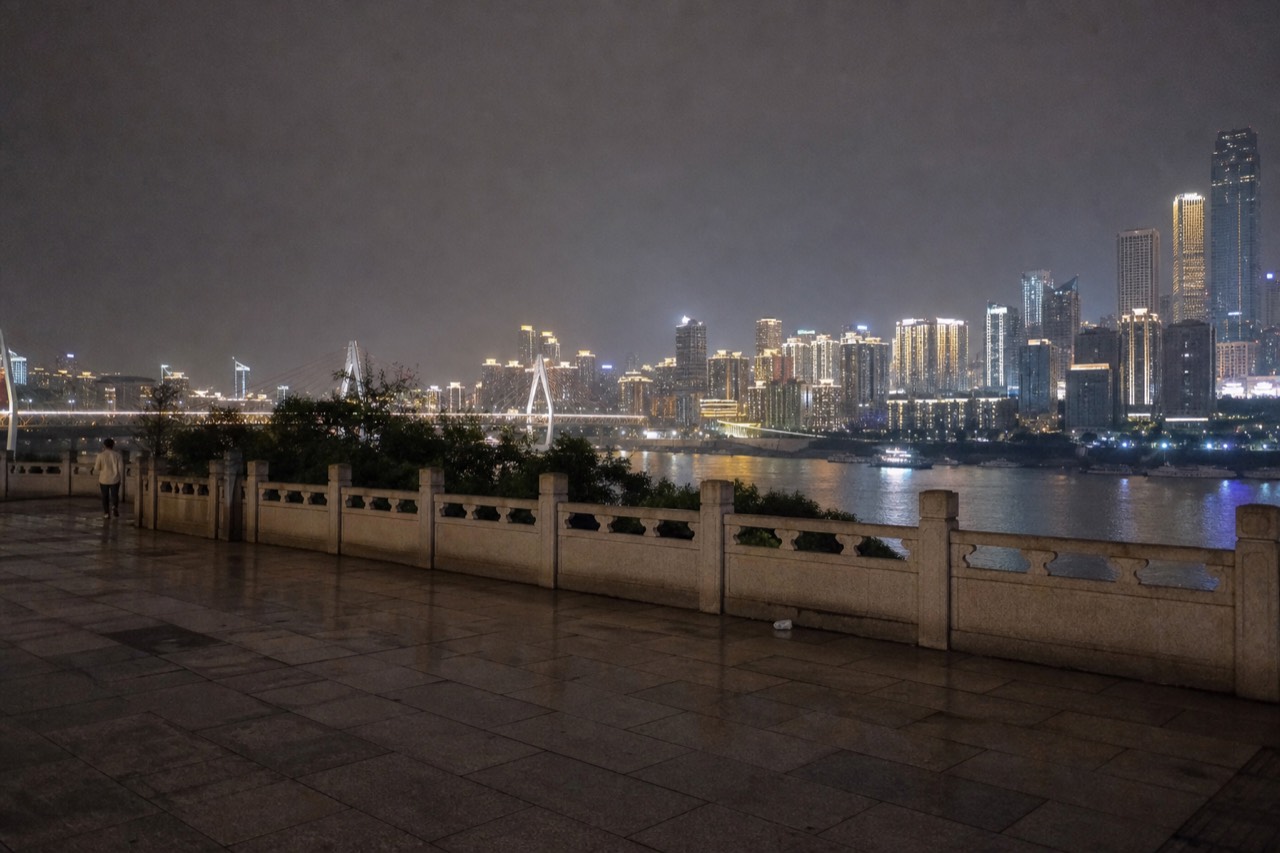
Chongqing received 2,147,800 inbound overseas visitors in 2025, and nearly 70,000 foreign travellers entered the city in July 2026 alone, up 84.7 percent. Almost none of them arrived speaking Chinese, and the city did not build its tourism surge around English either. It grew around Douyin videos, a riverside road, and a night skyline that needs no translation. So the honest version of the question is not whether Chongqing is English friendly, it is which specific moments of a trip depend on English and how each of those moments actually resolves. This page works through them one by one, ending with the moment this site exists for: booking a motorcycle photoshoot whose published service language is Chinese.
Is Chongqing English Friendly?
Not in the way Beijing or Shanghai visitors might expect, and anyone quoting a coverage percentage or ranking is guessing, because no authority publishes English-signage data for any Chinese city. What can be said honestly is narrower: the metro publishes station names and line information in English, the major payment apps work with foreign cards, and six of the city's seven free walking tours run in English, while most street-level conversation stays Chinese only. For a tourist, that mix is less friction than it sounds, because the parts of a Chongqing trip that need language are fewer than in most cities. You look at skylines, you ride trains whose stops are announced and displayed in both scripts, and you point at a menu. The friction concentrates in exactly one place: talking to a person about a specific arrangement, such as where to meet a rider at night.
That concentration is worth stating plainly. Wayfinding, payment and riding the metro are largely solved problems for a non-Chinese speaker in Chongqing. Negotiating, confirming and small talk are not. A traveller who plans around that asymmetry, doing the transactional parts in advance and treating the in-person parts as visual rather than verbal, gets along fine. A traveller who expects hotel-lobby English on the street gets frustrated within a day.
This is also the right frame for the city's most-shared tourist product. The viral motorcycle session is a visual experience: fifteen to thirty minutes of posing and riding against a lit skyline. Nobody on the reviews complains about the language, and the reason is structural. The product does not require a conversation to deliver what it sells. The crew points, you pose, the rider accelerates, the camera follows. The language question lands almost entirely on the booking and meeting arrangements, which happen in writing, in advance, on an app that translates.
There is one more framing fact. Chongqing's inbound growth is among the fastest in China, with Jiangbei Airport's immigration checkpoint handling more than 1.48 million inbound and outbound passengers in the first half of 2026, up 39.5 percent, the fastest growth among China's ten largest airports. The city is absorbing foreign visitors faster than its English provision is changing, which means the current state, thin but navigable, is the one you should plan for.
If you already know you want the night shoot, the three purchasable options below are the ones this site covers in detail, and the language mechanics of each are explained in the sections that follow.
How does the motorcycle session work when the service language is Chinese?
The listing publishes Chinese as its service language and guarantees no English-speaking rider, which sounds like a barrier until you see what the session actually consists of: about 30 minutes per person, a meeting at Nanbin Bell Tower Plaza on the south bank, 15 minutes of posed shooting or a short pillion ride, and files delivered by email or WeChat within 1 to 3 days. None of those steps depends on spoken English. The exact meeting spot is confirmed by the crew after booking, in writing. Poses are demonstrated rather than explained. The ride runs at 30 to 60 km/h with a photographer following, and the direction you get is a hand signal and a tap on the shoulder, not a sentence.
Reviewers who booked as English speakers tell a consistent story. They coordinated over WeChat, often with the help of the app's built-in translation, confirmed the meeting point and time in short written messages, and then found the session itself needed almost no shared language at all. The listing carries 10 reviews, too few for a reliable rating to be quoted, but 100-plus bookings and the pattern of those reviews are real signals: non-Chinese speakers are booking this and finishing happy.
The one place where the language gap could genuinely bite is the meeting. Nanbin Bell Tower Plaza is an area, not a pin, and the crew confirms the exact spot only after booking. The practical answer is to nail that confirmation down in writing on WeChat before you leave your hotel, and to have the plaza's name and address ready to show a taxi driver. Screenshot everything. A screenshot needs no translation.
Sessions run 18:30 to 22:00, evening and night only, and there is a hard reason for that end time: two-wheeled motorcycles are banned on Nanbin Road from 22:00 to 06:00 every day, a restriction in force since 29 January 2024, published by the Chongqing Municipal People's Government at the official notice. Knowing that changes how you read the schedule: a 21:00 start is not the crew being difficult, it is the legal window closing.
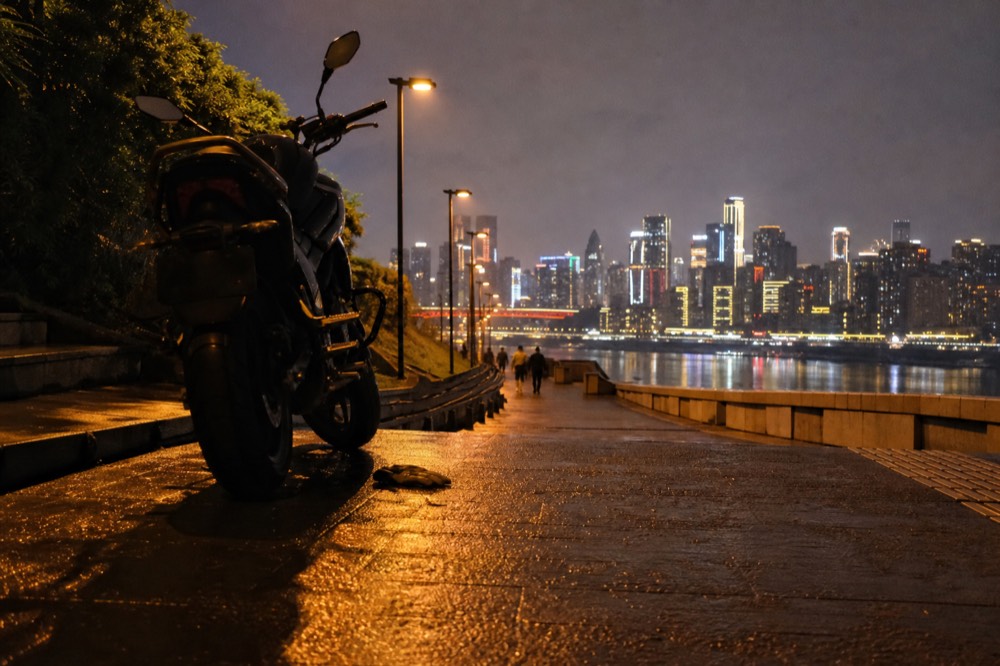
For a fuller breakdown of the two packages and which one fits which traveller, the companion guide on choosing photo or video covers the anatomy of each, and the question of who may legally ride pillion is handled in can a foreigner ride a motorcycle in China. Neither of those questions is a language question, which is exactly the point: the things that could stop you are legal and practical, not linguistic.
What do you actually need to communicate for this booking?
Four things, and only four: the date, the time window, the package choice, and the exact meeting point. Everything else, the poses, the route, the pace, the delivery of files, is handled by demonstration, by the crew, or by email. That is a small communication load for a tourist product, smaller than a restaurant order in some countries, and each of the four can be done in writing with translation support rather than spoken. The table below lays out each item, who initiates it, and what reviewers report actually happening.
| What needs communicating | When | How reviewers say it happens | English needed? |
|---|---|---|---|
| Date and time window | At booking | Chosen on the booking form, confirmed in writing | No, the listing handles it |
| Package choice (photo, no ride, or video, with ride) | At booking | Selected at purchase; the from-price belongs to the photo package | No, but read the inclusions carefully |
| Exact meeting spot | After booking | Crew messages the location on WeChat; screenshot it | Brief written exchange, translation-assisted |
| During the shoot | On the night | Poses demonstrated, direction by gesture, helmet provided | None |
| Receiving your files | Within 1 to 3 days | Sent by email or WeChat | None |
Two honest cautions come with that table. First, the packages are genuinely different products, and choosing on price alone is how the listing's one-star review happened: the photo package, from about $52.85 per person, includes no ride at all, the bike is a prop, while the video package, at HK$482, is a pillion ride with a professional rider and a photographer following, delivering one edited clip of 25 to 35 seconds. Second, both are sold as Single Person, one person per booking, so a couple books twice.
One more piece of communication planning pays off: WeChat is the channel. If you install it and add the crew before the night, the meeting problem shrinks to a shared location pin. Foreign Visa, Mastercard, Amex, JCB, Discover, Diners Club and UnionPay International cards can be bound to WeChat Pay and Alipay after passport verification, which covers the payment side too. Setup in advance beats setup at 21:30 on a dark plaza.
How does the ride get directed without shared language?
The video package's inclusion list names three things: the pillion ride with a professional rider, a photographer following, and action guidance during the ride, and none of that guidance is verbal in any language a phrasebook would help with, because riders position you before the bike moves, indicate the arm-stretch or heart gesture by doing it themselves, and keep the ride at a controlled 30 to 60 km/h while the following camera does the real work. The signature moves of the trend, arms outstretched, the heart gesture, the lifted hug-fly pose against the skyline, are all showable in a second and need no explanation. Chinese coverage of the trend describes exactly this: an assembly-line visual formula, optimised for short video, where the customer's job is to hold a pose, not to converse.
The 18-or-over age rule on the video package is worth flagging here because it is a communication-adjacent trap: it is published on the listing, enforced by the operator, and easy to miss if you skim. Still photos are not promised in the video package's inclusion list, though two reviewers were sent photos anyway, so the honest phrasing is "not promised", not "never given". The photo package, by contrast, promises all the negatives plus 9 retouched photos and no ride at all, in the operator's own words a static photo service.
If a moving clip is what you came for, the video option is the one that delivers it.
What English exists on the streets, the trains and the apps?
Chongqing Rail Transit publishes its station names, line names and network information with English alongside Chinese, the system runs 12 lines and 324 stations over 574.12 km, and every station a tourist visits, Xiaoshizi for Hongyadong, Liziba for the monorail-through-building, Jiaochangkou for Jiefangbei, Shangxinjie and Danzishi for the Nanbin Road corridor, is displayed and announced bilingually. That single fact does more for an English speaker in Chongqing than any amount of street English, because the metro is how you get everywhere. Fares start at 2 yuan for trips up to 4 km under the tariff in force since 30 July 2025, charged on shortest-path distance, and the fare structure is published, so even the ticket machines are guesswork-free.
Outside the metro, provision thins. Street signage mixes scripts inconsistently, restaurant menus in local places are often Chinese-only, and taxi drivers broadly do not speak English, so the standard move is a destination written in Chinese characters or a location pin on a map app. The payment apps, Alipay and WeChat Pay, offer English interfaces once configured, which moves a surprising share of daily friction from conversation to screen. Refusing cash is against China's rules, but the practical reality is that QR payment is the default almost everywhere a visitor goes.
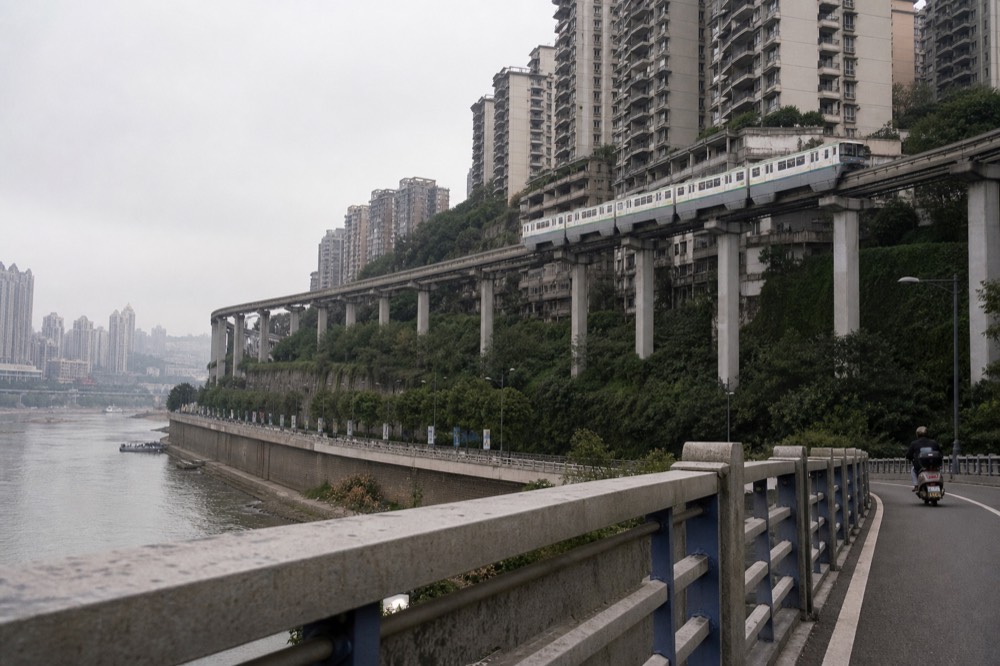
The network itself, its lines, hours and station connections, is covered in detail in the getting around Chongqing guide, which owns that topic. What belongs on this page is only the language layer: the system's own information is published bilingually, the official operator site cqmetro.cn carries the network data, and station names are romanised consistently, so a traveller holding an English hotel card or a map app can navigate without speaking to anyone. On the Loop Line that serves the shoot corridor, the last ordinary train runs at 22:30, half an hour after the session ends, which is a planning fact rather than a language fact but one worth carrying.
One genuinely useful piece of context for Americans and other visa-sensitive travellers: the 240-hour visa-free transit policy now covers 57 countries through 65 designated ports, and the National Immigration Administration publishes the policy in English. Chongqing Jiangbei International Airport is an eligible port. Entry formalities, in other words, are one of the better-documented English experiences in the whole trip.
What do the city's walking tours and other tourist services reveal?
Of the seven free walking tours listed for Chongqing, six advertise English as their language and one runs in Spanish, which is a small, checkable data point that says more about English provision in the city than any vague claim about signage. Walking tours are the most language-dependent tourist product there is, they are nothing but talk, and the fact that the city's listed supply is overwhelmingly English-language tells you the demand is there and being met by people who have chosen to serve it. The same pattern shows up in the photoshoot market: operators told Chinese media in early 2026 that their recent foreign customers outnumbered Chinese ones, and foreign customers were arriving through the same viral videos that required no Chinese to watch.
That is the real state of English in Chongqing. It is not ambient, it is not universal, and it is not comparable to Beijing or Shanghai in any way anyone has measured, because nobody has measured it. But where tourists actually cluster, services in English cluster with them, offered by operators who noticed who was arriving. The motorcycle session is a special case within that pattern because its product is visual, its booking is written, and its only genuine language moment, the meeting point, is solved by a screenshot.
| Situation | Language you encounter | English support |
|---|---|---|
| Metro stations and trains | Chinese and English names, bilingual announcements | Published bilingual |
| Payment apps (Alipay, WeChat Pay) | English interface available | English menus after setup |
| Free walking tours | Six of seven in English, one in Spanish | English is the default offering |
| Street-level shops and restaurants | Mostly Chinese only | Minimal, use translation or pointing |
| Taxis | Chinese only | Show address in characters or a map pin |
| The motorcycle session | Chinese service language, no English-speaking rider guaranteed | Written WeChat coordination, demonstrated poses |
The scale behind that last table matters. Tourism and related industries added 147.109 billion yuan of value in Chongqing in 2025, and a city moving that many foreign visitors with this little English is doing so because its core products, a skyline, a river, a monorail through a building, a night ride, are consumed with the eyes. Chongqing is unusually well matched to travellers who do not share its language, not because it accommodates English, but because so much of what it sells requires no language at all.
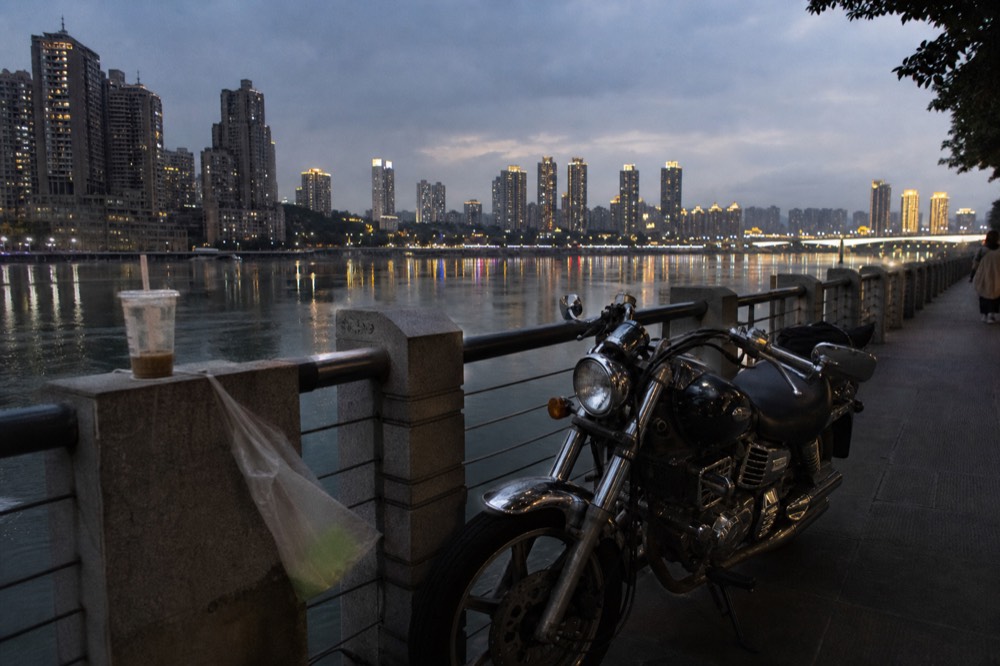
That is also, honestly, why this site exists. The crew behind the shoot the pages of Chongqing Motorcycle Photoshoot cover does not promise you an English conversation. It promises you a lit skyline, a bike, a rider and a camera, and delivers the files to your inbox within three days, which is the same promise it makes to its Chinese customers. The experience is one of the most language-neutral products in the city, provided the booking and the meeting point are locked down in writing beforehand, as the reviewers who coordinated over WeChat consistently did.
For that booking, the original listing is the one that carries both package options on one page.
Should language concerns change your plans?
Almost never, provided you do three things in advance: install and set up WeChat with a payment method before you arrive, get every meeting arrangement confirmed in writing rather than by phone, and treat in-person moments as visual exchanges where pointing and demonstrating do the work. Travellers who do that report Chongqing as easy. Travellers who arrive expecting to negotiate anything verbally, a taxi route, a menu substitution, a change of plan mid-shoot, hit the wall where the city's Chinese-first reality starts. The wall is real, it is just narrower than the fear of it, and it sits almost entirely on the transactional side of a trip rather than the experiential side.
There is a useful comparison hiding in the city's own tourism numbers. The inbound surge of 2026, the fastest airport growth among China's ten largest, is happening without any documented citywide push for English provision. Either thousands of foreign visitors are having a bad time quietly, which the reviews do not show, or the city's language-neutral way of selling itself works. The reviews, the walking-tour listings and the 100-plus bookings on the shoot listing all point the same way: people are managing, mostly by doing in writing what previous generations of travellers did by talking.
So plan for written coordination, not for conversation. Book the things that need specifics, confirm the specifics on WeChat, screenshot the confirmations, and let the skyline do the rest of the talking. The three options below are the complete purchasable set for the night shoot, and every one of them is booked in writing before you ever meet the crew.
The short answers below cover the questions travellers ask most: whether the city itself is manageable without Chinese, how the motorcycle session works when its service language is Chinese, and how the metro, taxis and walking tours treat an English speaker. Each one is answered from the verified facts on this page.
Common questions about English in Chongqing
Is Chongqing English Friendly?
Not in the everyday sense: street-level conversation is mostly Chinese only and the city publishes no English-signage figures. But the metro is bilingual, the payment apps have English interfaces, six of seven free walking tours run in English, and the visual core of the city needs no language. Plan for written coordination and it is very manageable.
Can I book the motorcycle photoshoot if I do not speak Chinese?
Yes. The listing publishes Chinese as its service language and guarantees no English-speaking rider, but reviewers coordinated in English over WeChat, confirmed the meeting point in writing, and found the session itself needed no conversation. Poses are demonstrated and direction is by gesture.
How do I find the meeting point without speaking Chinese?
The session meets at Nanbin Bell Tower Plaza on Nanbin Road, Nan'an District, and the crew confirms the exact spot after booking, typically by WeChat. Get that confirmation in writing, screenshot it, and show the address to your taxi driver. A location pin needs no translation.
Is the Chongqing metro usable without Chinese?
Yes. Station names, line names and announcements are published and spoken in English as well as Chinese, fares are distance-banded and displayed on machines, and every major tourist station, Xiaoshizi, Liziba, Jiaochangkou, Shangxinjie and Danzishi among them, is bilingual.
Do taxi drivers in Chongqing speak English?
Generally no. The standard workaround is to show your destination written in Chinese characters or a map pin on your phone. Payment can be cash or a QR code through Alipay or WeChat Pay bound to a foreign card.
Are there English tours in Chongqing?
Yes. Of the seven free walking tours listed for the city, six advertise English and one runs in Spanish, so the most language-dependent tourist product in the city is actually supplied mostly in English.