Can Americans Visit Chongqing?
Yes, Americans can visit Chongqing, and the 240-hour visa-free transit policy is the fastest route. Here is exactly what the policy covers, what it does not, and how to plan the entry.
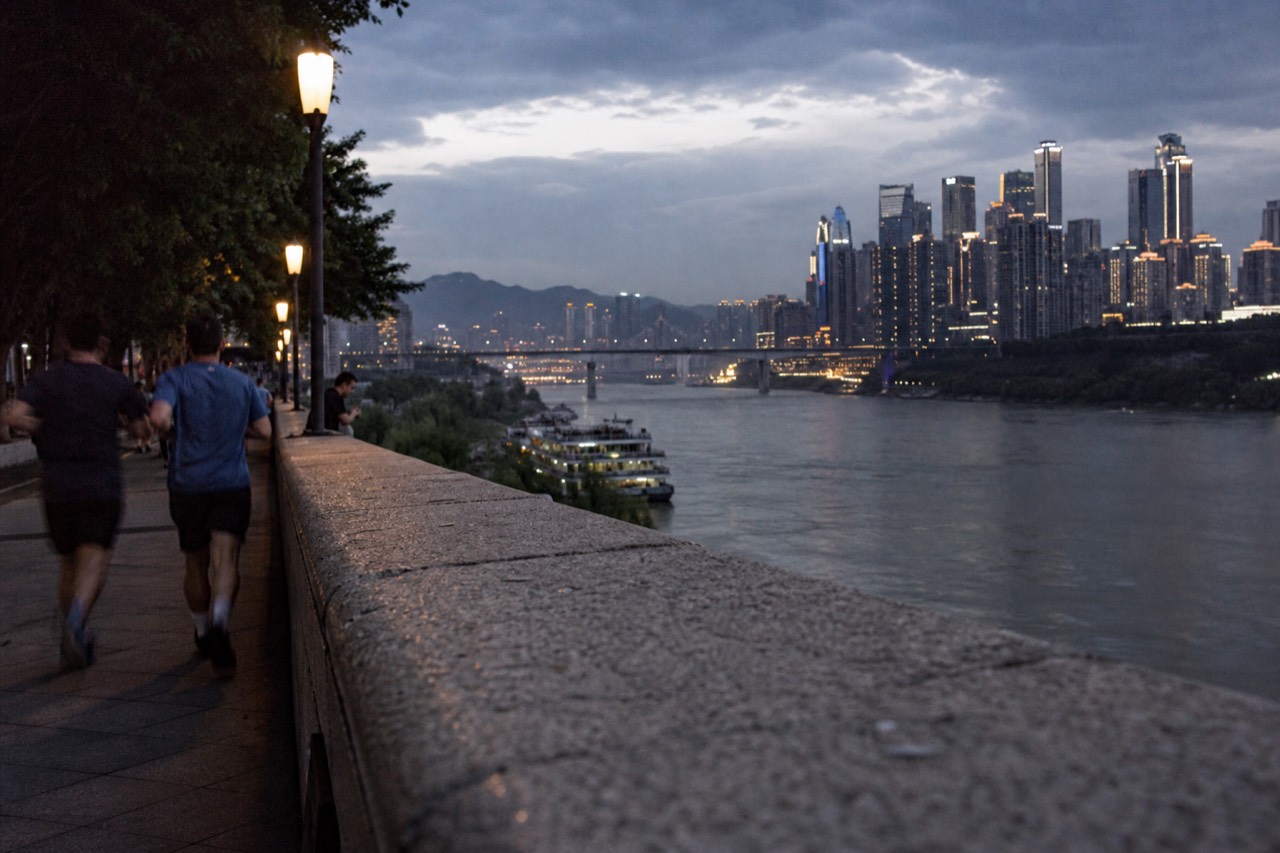
Can Americans Visit Chongqing?
Yes, Americans can visit Chongqing, and in most cases without applying for a visa in advance. The United States is named on China's verified 57-country list for 240-hour visa-free transit, Chongqing Jiangbei International Airport is an eligible entry port, and inbound tourism to the city is growing at record pace. The one hard condition is a confirmed onward ticket to a third country, not back to the United States.
That single condition deserves the emphasis, because it is where American travelers most often go wrong. The 240-hour policy, which the National Immigration Administration publishes in full on its policy page, is a transit rule, not a general tourist visa. You enter China on your way somewhere else, with a confirmed seat and departure date to a third country or region within 10 days, and you may stay in the permitted areas for up to 10 days. Chongqing, for an American routing through Asia, fits the policy almost perfectly: it is a major hub with strong onward connections, and it is a city whose tourism economy is growing fast enough that the infrastructure has caught up with the interest.
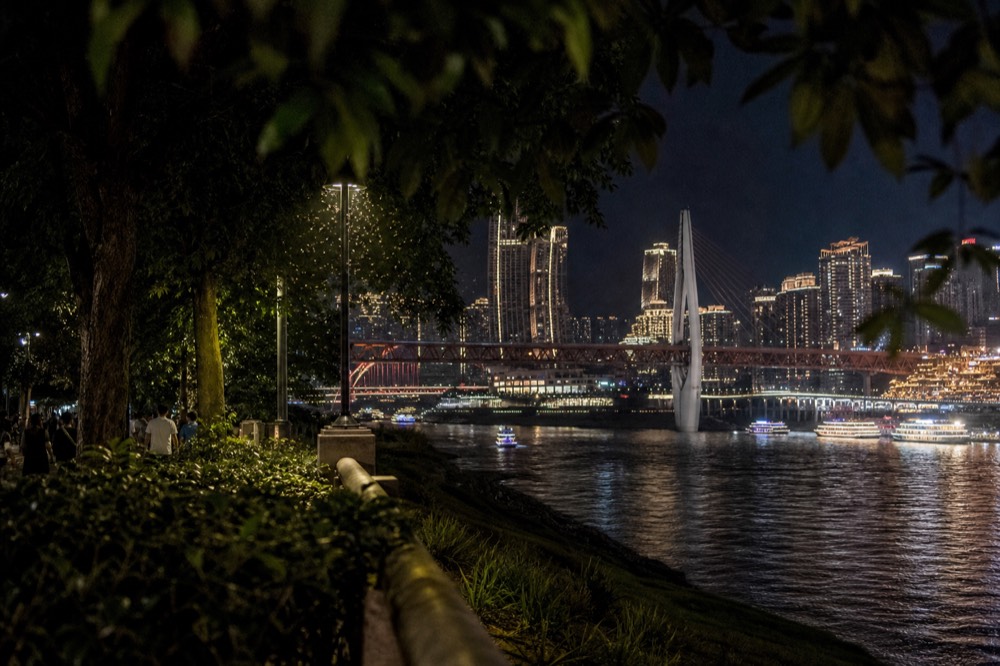
The numbers behind the welcome are real and sourced. Chongqing recorded 2,147,800 inbound overseas visitors in 2025, spending US$2.398 billion, according to the municipal statistics communique. The city's airport immigration checkpoint handled more than 1.48 million inbound and outbound passengers in the first half of 2026, up 39.5 percent, the fastest growth among China's ten largest airports, and nearly 70,000 foreign travellers entered Chongqing in July 2026 alone, up 84.7 percent. Americans are part of that wave, and the city is set up to receive them.
If a night motorcycle photoshoot on the riverfront is what is pulling you toward Chongqing in the first place, these are the bookable options on the corridor:
What does an American need to enter China?
An American needs one of three things: a valid visa obtained before travel, eligibility under the 240-hour visa-free transit policy, or eligibility under the 24-hour transit rule that applies to all nationalities. For most leisure travelers the 240-hour route is the practical one, and it requires only a valid passport, a confirmed onward ticket to a third country, and arrival at an eligible port such as Chongqing Jiangbei International Airport.
The distinction between the routes matters, so here is the honest comparison. The 240-hour policy covers nationals of 57 countries, verified against the National Immigration Administration's own list, and the United States is named explicitly under North America alongside Canada. Permitted activities are tourism, business, visits and family reunions. Work, study and news reporting still require the appropriate visa. The administration's Announcement No. 4 of 2026 is the document that brought the count to 57 on 20 August 2026, when Kyrgyzstan and Vietnam were added.
| Route | Who qualifies | Onward ticket needed | Maximum stay | What you can do |
|---|---|---|---|---|
| 240-hour visa-free transit | Nationals of 57 listed countries, including the US | Yes, to a third country, confirmed seat and date | 10 days, in permitted areas | Tourism, business, visits, family reunions |
| 24-hour visa-free transit | All nationalities | Yes, through an open port | 24 hours, in the port's restricted area unless a temporary permit is granted | Transit only |
| Regular visa (for example the L tourist visa) | Any applicant | No | Per the visa issued | Any lawful activity including work or study with the right visa |
One caution that the official sources support and that travel blogs often get wrong. The United States is not on China's unilateral 30-day visa-free entry list in any source this site's research has read, but that list has moved repeatedly and the exclusion should not be treated as a permanent published fact. The honest move is to link the administration's own policy page on unilateral visa-free entry and check it before you plan, because country counts on that list have changed several times. What is verified is the transit list, and on that list the US is present.
For the full policy breakdown, the complete 57-country list and the three-route comparison in detail, read the site's dedicated guide to China's 240-hour visa-free transit policy. This page owns the American reader's entry question; that one owns the policy itself.
What should you have ready at the desk?
Have your passport valid for the journey, your confirmed onward ticket to a third country with seat and date, your Chongqing accommodation details, and evidence you can support yourself, in that order of importance. The border officer is checking transit eligibility, not planning your trip, and the two documents that decide everything are the passport and the onward ticket. Print or screenshot the ticket before you land.
The onward ticket condition deserves a second mention because it is the one item on the list that cannot be improvised at the desk. A ticket back to the United States does not satisfy the transit rule on the usual reading; the onward destination must be a third country or region. An American flying Los Angeles to Chongqing to Tokyo qualifies. An American flying round trip Los Angeles to Chongqing does not, and needs a visa instead.
| Document | Why it matters | Notes for Americans |
|---|---|---|
| Passport | Identity and the policy's document requirement | Ordinary passport; keep validity well beyond your stay |
| Onward ticket | The transit condition itself | Confirmed seat and departure date to a third country within 240 hours |
| Accommodation details | Routine entry question | Have the address written down, in characters if possible |
| Proof of funds | Standard entry support | A card is usually enough; no published minimum figure exists |
| Return plans | Not a transit substitute | A US round trip requires a visa, not the transit rule |
No visa fee, processing time or application requirement is printed here, because none of those figures is verified in this site's research. They belong to the embassy and consulate layer, and they change. If your route does not fit the transit policy, apply through the official visa application channels and treat any fee you read on a third-party site as unconfirmed until you see it on an official page.
What can you actually do under the 240-hour rule?
Under the 240-hour rule an American can sightsee, photograph, eat, ride the metro, book tours and photoshoots, visit people and conduct business meetings, anywhere within the permitted areas of the 24 listed provinces and municipalities, for up to 10 days. You cannot work, study, or report the news, and you cannot overstay the window: the allowance is 240 hours, or 10 days, per the National Immigration Administration.
The permitted-activities list is short and clear, and it is worth reading it precisely rather than treating the policy as a full tourist visa. Tourism is expressly permitted, which covers everything a leisure visitor to Chongqing would plausibly do: the night skyline, the food, the monorail, the river, and yes, booking a motorcycle photoshoot on Nanbin Road, which is a tourist activity sold as one. Cross-provincial movement within the listed regions is allowed, so an American can transit through Chongqing and continue to other permitted provinces before flying on, though the ports table is loaded dynamically on the official site and travelers should check it before booking rather than relying on any third-party enumeration.
| Permitted under 240-hour transit | Still needs the appropriate visa |
|---|---|
| Tourism and sightseeing | Employment of any kind |
| Booking tours, photoshoots, tickets | Enrolled study |
| Business visits and meetings | News reporting |
| Visiting family and friends | Long-term residence |
| Travel across the 24 permitted provinces | Overstaying the 240-hour window |
One more distinction that saves confusion at the border. The separate 24-hour transit rule applies to nationals of all countries at all open Chinese ports, but it requires the traveler to stay in the port's restricted area unless a temporary entry permit is obtained. It is not a way to see Chongqing. The 240-hour rule is the one that lets an American actually leave the airport and spend days in the city.
How do you fit Chongqing into a short stopover?
Fit Chongqing into a stopover by anchoring the visit around one evening on the riverfront. The shoot corridor on Nanbin Road runs sessions from 18:30 to 22:00, the skyline lighting switches on at 20:00 in summer and 19:30 in winter, and the whole experience, including the metro ride in, fits inside a single late afternoon and evening.
This is the practical shape of a transit visit, and it works because Chongqing's headline attractions are nocturnal and concentrated. The Yuzhong peninsula skyline across the Yangtze, the bridges, and the riverside lights that made the city's motorcycle videos go viral, more than 1.52 billion views across related videos by late August 2026 according to the Global Times, are all backdrop to one stretch of south-bank road. You do not need a week. You need one clear evening and a booking.
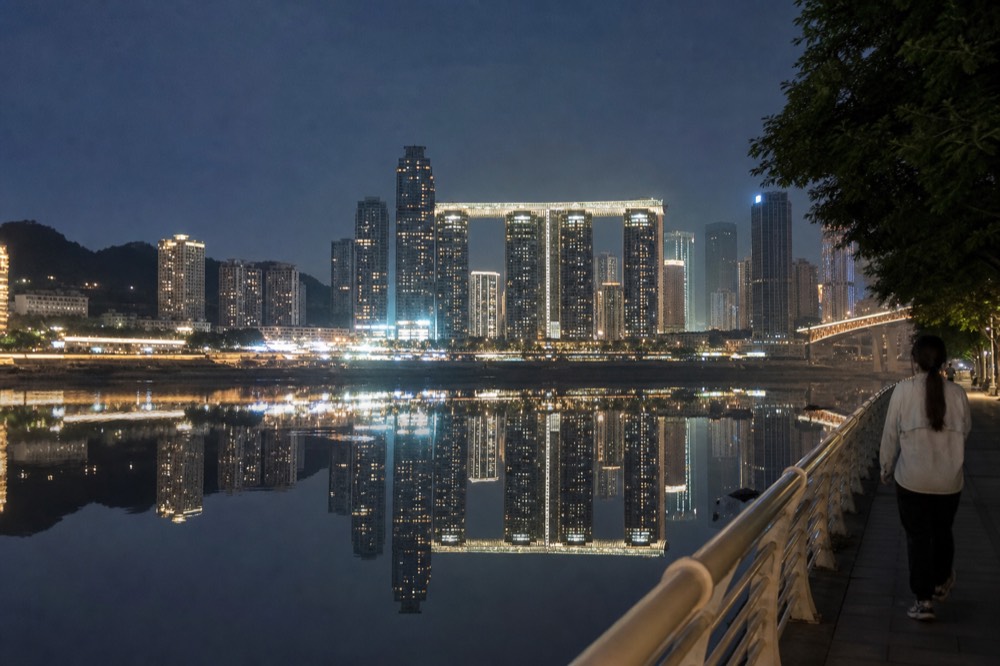
The timing details are verified and worth planning around. Sessions meet at Nanbin Bell Tower Plaza on the south bank, and the crew confirms the exact spot after booking. Two-wheeled motorcycles are banned on Nanbin Road from 22:00 to 06:00 every day, in force since January 2024, which is exactly why the session window closes at 22:00. The city's decorative skyline lighting follows a fixed clock schedule, on at 20:00 from 1 May to 30 September and 19:30 from 1 October to 30 April, extended by two hours over Spring Festival and National Day. An evening arrival into CKG, a metro or taxi ride to the south bank, and a 20:00 session slots together almost without slack.
If a ride is not the point and photographs are, the static option is the cheaper and simpler one, and it is the package the from-price belongs to:
The Motorcycle Photo Shoot Package is 15 minutes of posed shooting with a parked bike, no ride at all, at HK$414, which is the US$52.85 from-price you will see quoted. You get all the negatives plus 9 retouched photos, delivered by email or WeChat within 1 to 3 days, which matters on a stopover: the files can land while you are already in your onward country. It excludes clothing, makeup and any riding. The video package, by contrast, is HK$482, about 16 percent more, is limited to travelers 18 or over, and delivers one edited video of 25 to 35 seconds from a pillion ride with a professional rider, with stills not promised. Two real products, one decision: pictures with a bike, or a ride that produces a clip.
What is the route from the airport into the city?
The route from Chongqing Jiangbei International Airport into the city is by metro Line 10 from Terminal 3 or by taxi, with the metro running from roughly 06:30 until late evening and the taxi flag-fall at 10 yuan for the first 3 kilometers in the daytime band. International flights use Terminal 3A; the newer Terminal 3B serves domestic flights only.
CKG is a serious hub by any measure. It opened in 1990, now has four runways, and Chongqing's airports together handled 51,126,900 passengers in 2025, up 2.4 percent. Terminal 3B entered service in April 2025, but international flights remain at T3A, so an American arriving from overseas lands at the terminal with the international connections. From the airport operator's own published times, Line 10 serves both T2 and T3, with first trains around 06:30 and last trains between about 22:30 and 23:53 depending on direction and terminal; Line 3 serves T2 only. The distance-banded metro fare starts at 2 yuan for trips up to 4 kilometers, set by a municipal price notice in force since July 2025.
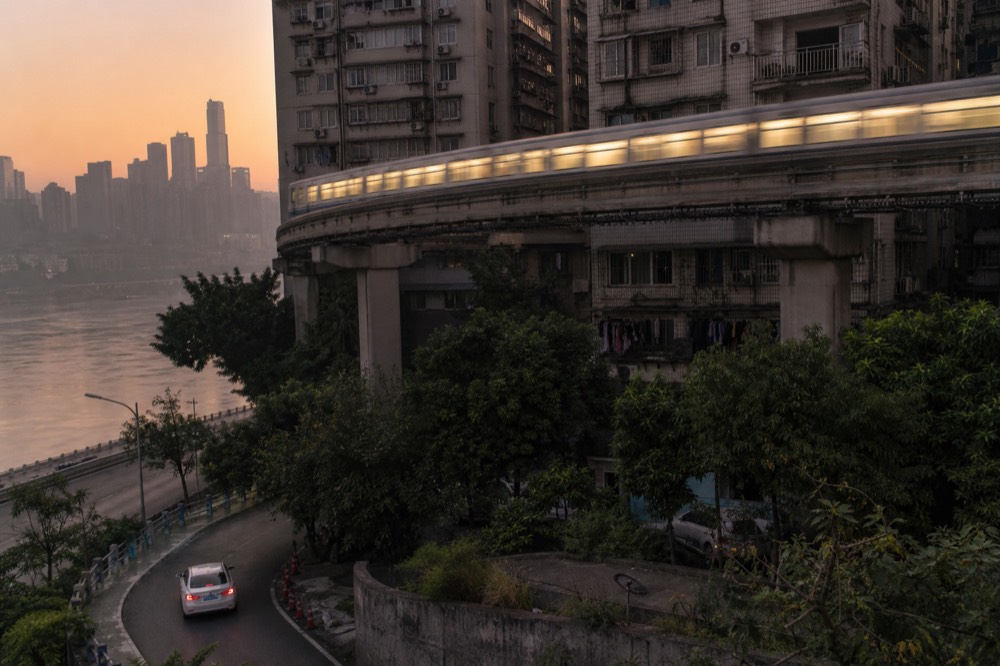
For the shoot corridor specifically, the two stations that matter are Shangxinjie on the Loop Line and Line 6, and Danzishi on the Loop Line, which sits roughly 1.8 kilometers from the Bell Tower Plaza meeting point. One planning note derived from the published schedules: the Loop Line's last train on an ordinary day is 22:30, and the session ends at 22:00, so the metro is tight after a shoot and a taxi is the realistic way back. The daytime taxi tariff runs to 23:00, so a 22:00 finish is still inside the 10-yuan flag-fall band. Paying is its own question: foreign cards can be bound to Alipay and WeChat Pay after passport verification, a mechanism described in traveler guides, though no official fee percentage is published, so set the app up before you fly rather than at the curb.
For everything on getting around once you are inside the city, the metro lines, the monorail, the cableway, the site's getting around Chongqing guide covers it in full.
Once the practical layer is settled, the experience itself is the easy part:
Do other Americans actually make this trip?
Yes, and in growing numbers. Chongqing's inbound growth is among the fastest in China, with the airport checkpoint up 39.5 percent in the first half of 2026 and nearly 70,000 foreign travellers entering in July 2026 alone, and the city's tourism industry now adds 147.109 billion yuan of value a year, 4.4 percent of its GDP. Americans arriving on the transit policy are part of a measurable wave, not a novelty.
The Global Times reporting on the motorcycle trend records foreign customers outnumbering Chinese ones for some operators, and quotes Yang Gen of the Chongqing Municipal Development and Reform Commission saying the Landing Visa phenomenon "was not a tourism project designed by the city in advance. Instead, visitors discovered a location and created a new way to experience it themselves." That is the honest frame for an American planning this trip: the city did not build this for tourists, tourists built it, and the city has since accommodated it with designated filming zones and police management rather than prohibition.
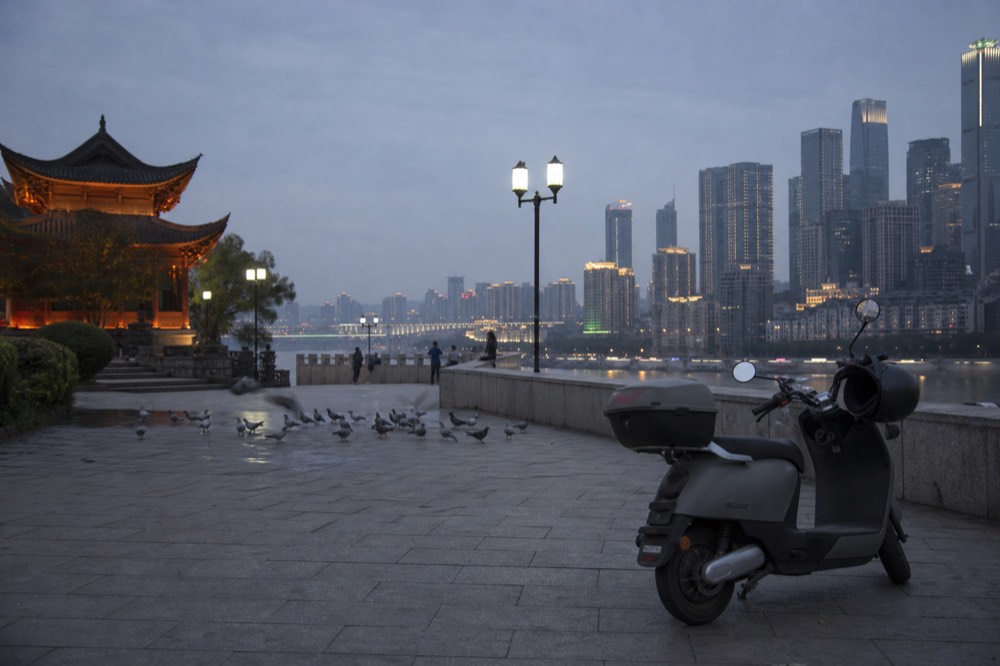
This site, Chongqing Motorcycle Photoshoot, exists because that wave produced exactly one well-listed product on the corridor, and the questions Americans ask about it cluster around entry, safety and worth. Two of those have their own answers. For the security picture, advisories and street-level reality, read is Chongqing safe for Americans. For the broader question of whether the city justifies the flight, is Chongqing worth visiting for tourists makes the case with the numbers. The entry answer is settled here: yes, with a passport and an onward ticket, for up to ten days.
Whichever package fits, these are the three ways to book a session on the Nanbin Road corridor:
These are the questions Americans ask most often about entering Chongqing, answered from the verified policy documents and the city's own published statistics. The short version: yes, you can visit, the 240-hour transit policy is the fastest route, an onward ticket to a third country is the one non-negotiable condition, and everything from the airport transfer to the evening photoshoot fits comfortably inside a short stopover.
Common questions about visiting Chongqing
Can Americans Visit Chongqing?
Yes. The United States is on China's verified 57-country list for 240-hour visa-free transit, and Chongqing Jiangbei International Airport is an eligible port. An American with a valid passport and a confirmed onward ticket to a third country can enter visa-free for up to 10 days for tourism. A round trip back to the US requires a regular visa instead.
Does the 240-hour transit policy require a ticket out of China?
Yes. The policy requires a confirmed onward ticket with a confirmed seat and departure date to a third country or region within 240 hours. A return ticket to the United States does not satisfy the transit condition on the usual reading; you need a visa for a round trip.
Can Americans enter China without a visa for 30 days?
The unilateral 30-day visa-free entry list covers roughly 50 countries, but the United States does not appear on it in any source this site's research has read. The list has moved repeatedly, so check the National Immigration Administration's own policy page before planning. The verified route for Americans is the 240-hour transit policy.
What can Americans do under the 240-hour rule?
Tourism, business visits, family visits and general sightseeing are permitted, including booking tours and photoshoots, anywhere in the permitted areas of the 24 listed provinces and municipalities. Work, study and news reporting require the appropriate visa, and the stay cannot exceed 240 hours.
How do I get from Chongqing airport to the city?
Metro Line 10 serves Terminal 3 from around 06:30 until late evening, and taxis run at a 10-yuan flag-fall for the first 3 kilometers in the daytime band, which runs to 23:00. For the shoot corridor on the south bank, Shangxinjie and Danzishi stations on the Loop Line are the closest, though the last Loop Line train on an ordinary day is 22:30.
Is one evening in Chongqing enough for a photoshoot?
Yes. Sessions run 18:30 to 22:00 on Nanbin Road, the skyline lighting switches on at 20:00 in summer and 19:30 in winter, and files are delivered by email or WeChat within 1 to 3 days, so a single evening covers the whole experience and the photos can arrive after you have flown on.