Is Chongqing Safe For Americans?
An honest look at safety in Chongqing for American visitors: what the official advisories say, what the published record shows about the Nanbin Road shoot corridor at night, and the practical friction points that actually matter.
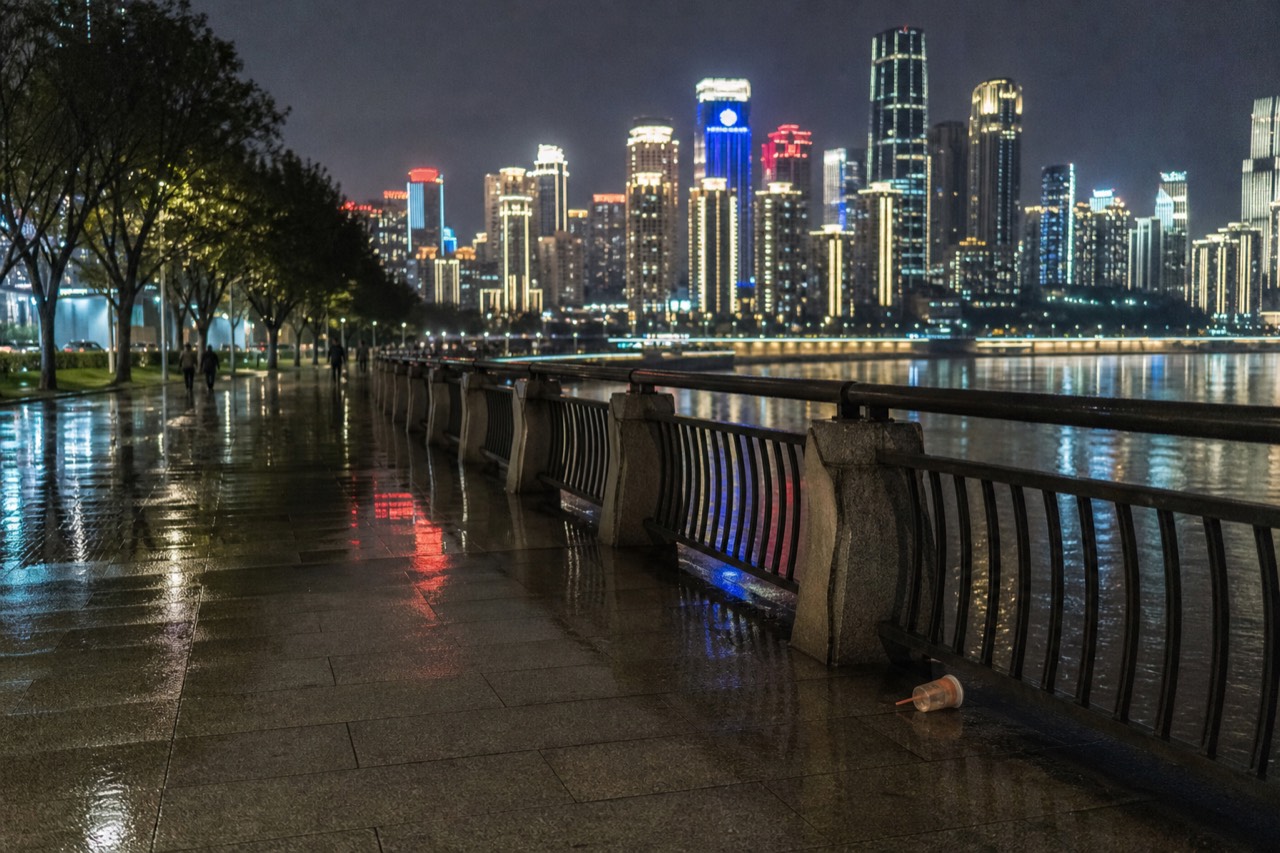
Is Chongqing Safe For Americans?
The honest answer is that no authority publishes a crime rate for Chongqing, so any number you have seen compared with a US city is not an official statistic, but the published record shows a city with a lit, busy riverside corridor, two metro stations serving it, a municipal rule that clears motorcycles off it at 22:00 every night, and foreign arrivals growing fast enough that Chongqing's airport posted the fastest inbound growth of China's ten largest.
What follows is built on what is actually published rather than on reassurance. The US government's position on record is Level 2 for mainland China, Exercise Increased Caution, and this page quotes it in full below without softening it. The UK government does not advise against travel and characterises serious crime against foreign nationals as relatively rare. Beyond the advisories, this page focuses on the thing this site knows best: the Nanbin Road corridor on the south bank, where the viral motorcycle photo and video sessions actually happen, in the hours between 18:30 and 22:00 when they run. That corridor has published rules, published lighting schedules, published metro hours and a documented police presence. Those are better safety evidence than any invented crime score.
Chongqing is also, by Chinese standards, an unusually motorcycle-friendly city. It built 6,473,100 complete motorcycles in 2025, up 9.1 percent year on year, according to the municipal statistics communique. There is no city-wide motorcycle ban of the kind Beijing, Shanghai or Guangzhou impose. Restrictions are targeted and specific, and the one that matters most to this article is a night-time two-wheeler ban on exactly the road where the photoshoots run.
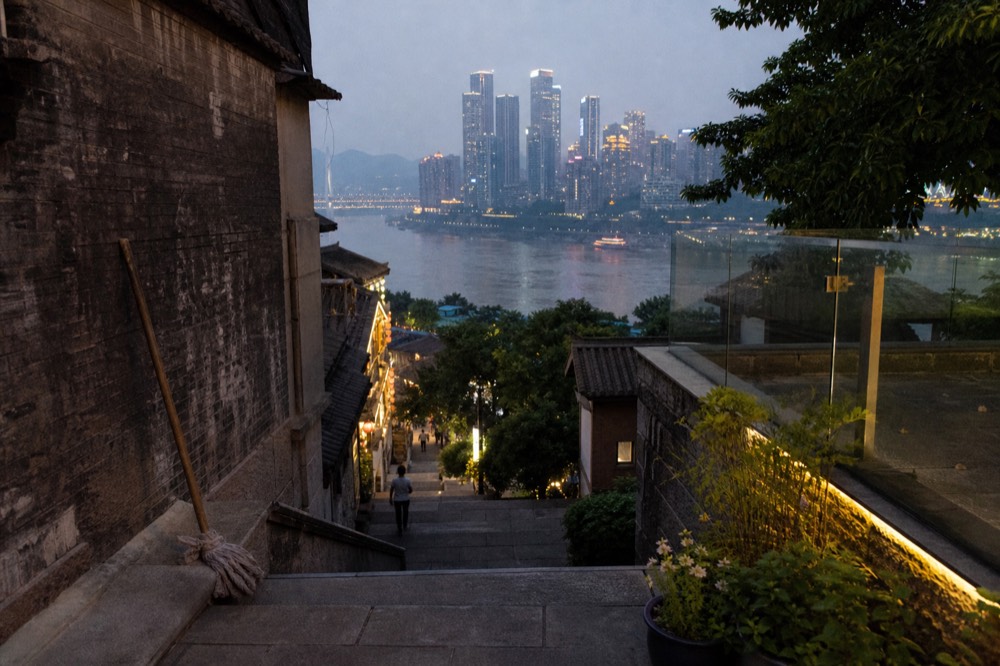
If you are reading this while planning a trip, the practical takeaway is simple: the session corridor is a public riverside promenade with restaurants, foot traffic, metro access and a published police response to the photoshoot trend itself. The friction points that are real are logistical, not criminal: a crowded road at night, a meeting point the crew confirms only after booking, a service delivered in Chinese, and a 22:00 finish that collides with the motorcycle curfew by design. Those are covered in detail below.
What do the official travel advisories actually say?
The US State Department advises Level 2 for mainland China, Exercise Increased Caution, citing verbatim "arbitrary enforcement of local laws, the use of exit bans without a fair and transparent process under the law, and the risk of unjust arrest or detention", while the UK does not advise against travel and Australia advises exercising a high degree of caution.
That is the full, unsoftened US position, and it deserves to be quoted rather than paraphrased. The advisory's summary line, as published on the State Department's own advisory feed, reads: "Exercise increased caution in mainland China due to the arbitrary enforcement of local laws, the use of exit bans without a fair and transparent process under the law, and the risk of unjust arrest or detention." Note also that the same advisory covers Hong Kong at Level 2 and rates Macau at Level 3, Reconsider Travel. If you are adding Macau to the same itinerary, that is a materially different rating and worth knowing before you book.
The UK's Foreign, Commonwealth and Development Office does not advise against travel to mainland China, and its own characterisation of crime, on the FCDO safety and security page, is worth quoting because it is a government's own wording: "Serious crime against foreign nationals is relatively rare, but incidents can happen. Take care of your belongings at major tourist sites and other busy places, particularly where foreign nationals gather." Australia's Smartraveller lists China at "Exercise a high degree of caution". Do not rely on a printed date for the Australian advice; it shifts, and the level is the stable fact.
Here is the part most comparison articles skip. No authority, Chinese or international, publishes a crime rate or crime statistic for Chongqing. The municipal statistical yearbook, the statistics bureau, the public security bureau and the procuratorate's work reports were checked, and none of them publishes a city crime rate. So if a blog or a crowd-sourced "crime index" site has shown you a number for Chongqing next to a number for Chicago or Los Angeles, that number is not an official statistic and cannot be compared with one. The honest substitute for a crime rate is what governments say on record, which is above, plus what is published about the specific places and hours you will actually be in, which is the rest of this page.
The other published safety number that genuinely applies to a visitor is road safety, because a motorcycle session puts you on a road. The World Health Organization's modelled estimate puts China's road traffic death rate at 17.4 per 100,000 population against 14.2 for the United States, for the same year and the same method. China's officially reported national count for its most recent published year is 59,280 road traffic deaths. These are different measures and are never merged here: one is a WHO model, one is a national report. The session ride runs at 30 to 60 km/h on a city riverside road, not an expressway, and motorcycles are capped and barred from carrying passengers on expressways anyway.
Is Nanbin Road safe at night?
Nanbin Road is a roughly 24.9 km riverside landscape avenue administered by Nan'an District, described by the district government as the core pole of the Two Rivers and Four Banks area, lit by the municipal landscape-lighting schedule until at least 22:30, served by two metro stations, and subject to a two-wheeler ban from 22:00 to 06:00 that is the published reason the photoshoot session window ends at 22:00.
That is the corridor as the published record describes it, and it is worth reading carefully because it answers the night-safety question with evidence rather than vibe. The Global Times reported that riders pose "against the glittering skyline across the Yangtze River" at "designated spots along Nanbin Road", and that Chongqing traffic police have handled the trend through enforcement and education rather than a ban: designated safe filming zones on the road, time controls, warnings issued to photoshoot operators, and zero tolerance for hands-off riding or illegally modified bikes. A police presence with published enforcement actions is, for these purposes, safety infrastructure.
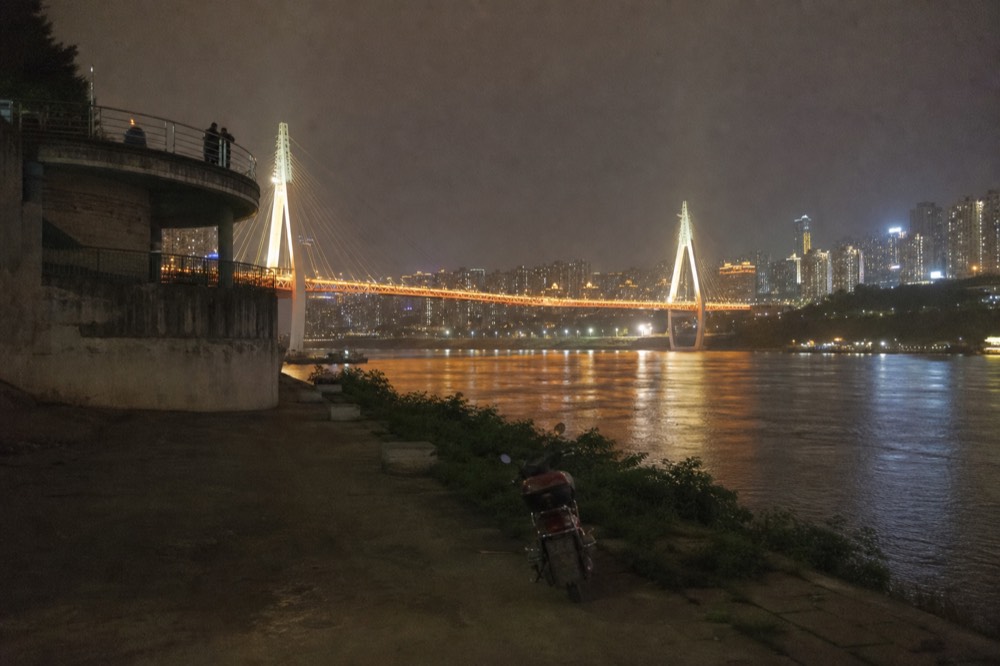
The lighting is on a published municipal schedule, which matters more than it sounds. Under the city's landscape-lighting rules, the core-area skyline, riverside towers and cross-river bridges you are looking at from Nanbin Road switch on at 20:00 from 1 May to 30 September and at 19:30 from 1 October to 30 April, staying on no earlier than 22:30 in summer and 21:30 in winter, with one to two hour extensions over public holidays. You are shooting on a lit promenade looking at a lit skyline, inside a window when the lights are guaranteed by municipal regulation.
| What | Published fact | Why it matters at night |
|---|---|---|
| The road | Nanbin Road, about 24.9 km, Nan'an District, south bank | Busy, developed riverside avenue with restaurants and foot traffic, not an empty back street |
| The lighting | Core-area lights on at 20:00 in summer, 19:30 in winter, off no earlier than 22:30 or 21:30 | The whole session window is inside the lit period |
| The metro | Shangxinjie (Loop Line and Line 6) and Danzishi (Loop Line), which runs to 22:30 on an ordinary day | A train home exists, but with roughly half an hour after a 22:00 finish |
| The road rule | Two-wheelers banned 22:00 to 06:00 daily, in force since 29 January 2024, between the Lanhua Road and Tengjiang Road junctions | The session ends at 22:00 because the law clears motorcycles off the road at 22:00 |
| The police | Designated filming zones, time controls, warnings to operators, zero tolerance for hands-off riding | The trend is policed, not ignored |
The 22:00 curfew deserves a plain explanation, because it cuts both ways. It means the road you are on has been deliberately managed around two-wheeled traffic at night, and it also means that if anything runs late, the ride legally cannot. A session that starts at 21:00 has one hour of rideable window. Booking the earlier part of the evening, especially in summer when the lights only come on at 20:00, gives you the lit backdrop and a margin.
The meeting point is the one real, sourced friction point on the whole product. The listing meets at Nanbin Bell Tower Plaza on Nanbin Road, and the crew confirms the exact spot after booking, because the plaza is an area rather than a precise pin and the road is long. One reviewer reported being unable to find the rider on a crowded road. That is the failure mode to plan for: confirm the exact meeting spot in writing before you leave, arrive early, and have the booking confirmation and a way to contact the crew on your phone. On a busy Saturday with the skyline lit, a road full of motorcycles and a plaza full of visitors, a missed connection is a logistics problem, and a prepared one is a five-minute problem.
Saying that plainly is more useful than pretending it does not happen. The video package in particular puts you on the back of a moving motorcycle at 30 to 60 km/h with a professional rider and a following photographer, so the connection and the briefing are worth getting right, not glossing. The broader practical frictions, and what to do about each, are set out below.
| Friction point | What is real | What to do |
|---|---|---|
| Finding the crew | Meeting point is Nanbin Bell Tower Plaza, exact spot confirmed only after booking; one reviewer could not find the rider on a crowded road | Confirm the spot and a contact method in writing before you go, arrive 15 minutes early |
| Language | Service language is Chinese; no English-speaking rider is guaranteed | Use a translation app for the briefing, keep expectations simple, bring the confirmation |
| Timing | Sessions 18:30 to 22:00, night only, no daytime slot; lights on at 20:00 in summer | Book 19:00 to 20:00 starts so the lit window overlaps the ride |
| Getting home | Loop Line last train 22:30 on ordinary days; the 22:00 finish leaves roughly half an hour | Plan a taxi; the daytime taxi tariff, 10 yuan for the first 3 km, runs until 23:00 |
| Crowds | The busiest sight, Hongyadong, runs capacity controls; the corridor itself fills on weekends and holidays | Read the holiday table below and prefer a weekday session |
How does the session itself handle safety?
The listing supplies a helmet, which matches Chinese law, because the Road Traffic Safety Law requires both the rider and the passenger on a motorcycle to wear safety helmets, and the implementing rules require a pillion passenger to sit astride facing forward, with no one under 12 on the rear seat.
That is the legal frame around every ride, and it is worth knowing because it explains several things a first-time guest might otherwise find odd. The helmet is not a courtesy, it is required. The rider keeping both hands on the handlebars is not a stylistic choice, it is the law, and Chongqing traffic police have said publicly that hands-off riding gets zero tolerance. And the poses you have seen in the viral clips, arms outstretched, heart gestures, happen with a professional rider in control of the machine, not with a tourist loose on a rented bike.
The photo package involves no ride at all: the bike is a prop you pose with, 15 minutes of posed shooting, all the negatives plus 9 retouched photos, from about $52.85 per person. The operator's own words are that it "only provides static photo shooting services and does not include a motorcycle riding experience". If your question about safety is really a question about riding on the back of a motorcycle at night in a Chinese city, that package answers it: you stand next to a stationary bike on a lit promenade and a photographer shoots you against the skyline. It is also the package the from-price belongs to.
The ride package is the one with the motorcycle in motion: a pillion ride with a professional rider and a photographer following, one edited video of 25 to 35 seconds, riders 18 or over, action guidance during the ride. Choosing between the two on price alone is how people end up disappointed, and the listing's single 1-star review is exactly that: a guest who expected one thing and got the other. From a safety standpoint, both run on the same lit, policed corridor inside the same window, and both end by 22:00 because of the road rule, not because the crew wants to stop.
Do crowds and holidays change the calculation?
Yes, materially: China's published 2026 holiday calendar concentrates domestic travel into defined blocks, Spring Festival from 15 to 23 February, Labour Day from 1 to 5 May, and National Day from 1 to 7 October, and the city extends its landscape lighting by two hours over Spring Festival and National Day, which shifts both the crowds and the light.
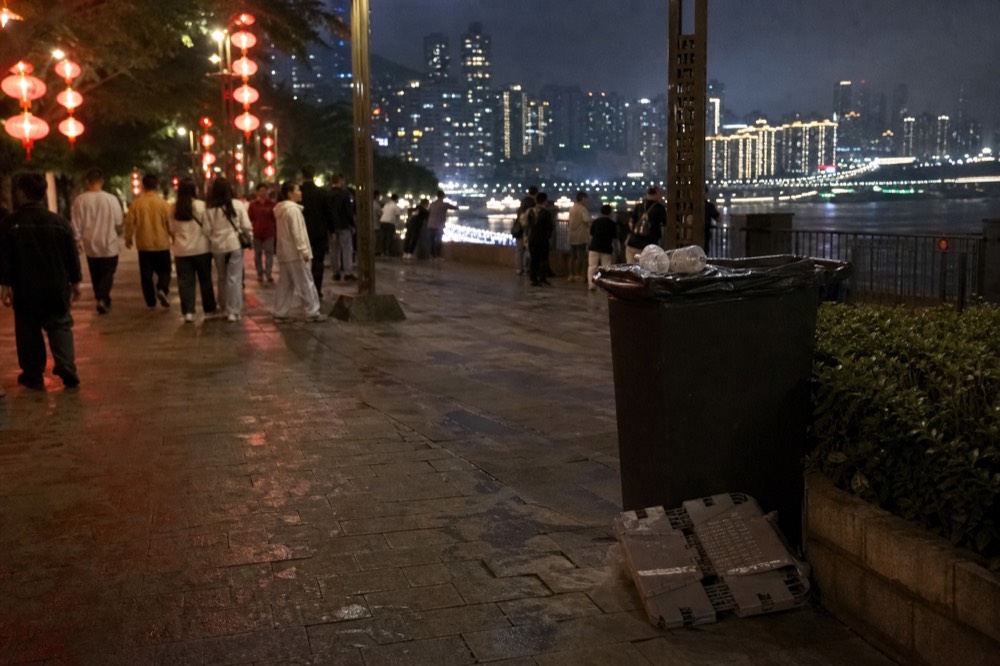
The holiday extensions are actually a quiet bonus: over Spring Festival and National Day the skyline stays lit until roughly 23:30, well past the end of your session, so a Golden Week booking gets the fullest version of the backdrop. The trade-off is people. The busiest sight in the city, Hongyadong, has a documented capacity regime with reservation requirements at peak periods, and the Liziba monorail viewing platform runs one-way pedestrian circulation during peak holidays. Nanbin Road is a long corridor rather than a single pinch point, so it absorbs crowds differently, but a Saturday in Golden Week is a different experience from a Tuesday in March.
| 2026 period | Dates | What changes |
|---|---|---|
| Spring Festival | 15 to 23 February | Peak domestic travel; landscape lighting extended two hours, lit to roughly 23:30 |
| Labour Day | 1 to 5 May | Five-day holiday; lighting extended one hour; summer lighting schedule begins (on at 20:00) |
| Dragon Boat | 19 to 21 June | Three-day holiday; late sunsets, lights on at 20:00 |
| Mid-Autumn | 25 to 27 September | Three-day holiday; special drone-show dates have run adjacent to it |
| National Day | 1 to 7 October | Golden Week peak; lighting extended two hours; busiest stretch of the year |
There is one more published night-time spectacle worth knowing about, because it shares your airspace. A recurring drone light show runs over the core riverfront on Saturday evenings at 20:30, with extra dates on public holidays, announced month by month by the organising command. The show is over the same stretch of river you are looking at, and the notices that publish its schedule also carry a strict prohibition on unapproved drone flight across the riverfront area, expressly including the Changjiahui shopping park on Nanbin Road. That matters to an American visitor for a simple reason: the import, possession and use of drones is tightly regulated in China, and the central riverfront is a published no-fly area. Leave the drone at home; the professionals filming your ride have the gear and the position anyway.
What about money, taxis and getting back to your hotel?
For most Americans the practical risks are logistical: payment apps that need setup before arrival, a metro system whose Loop Line stops at 22:30 on ordinary days, and a taxi tariff where the daytime rate, 10 yuan for the first 3 km, runs until 23:00, so a 22:00 session finish lands inside the cheaper band.
Payments first, because it is the most common American friction in China. Foreign Visa, Mastercard, Amex, JCB, Discover, Diners Club and UnionPay International cards can be bound to Alipay and WeChat Pay after passport verification, and once bound, foreign cards work at metro gates and in shops. Set this up before you fly, and carry both apps as backup for each other. Cash is also legally protected: refusing RMB cash is against the rules, so a small amount of cash is a reasonable fallback, not a liability. The session itself is booked and paid through the live listing, so the payment friction at the roadside is minimal, but the taxi home is where it surfaces.
Getting home after a 22:00 finish is the one genuinely tight connection of the evening. The corridor's two stations, Shangxinjie and Danzishi, are both on the Loop Line, which runs until 22:30 on an ordinary day and 23:00 on holidays and the day before. Half an hour, plus a climb, is a thin margin after a session that ends exactly at 22:00. The realistic plan is a taxi, and the published main-urban-area tariff makes it predictable: 10 yuan for the first 3 km and 2 yuan per km after that until 23:00, then an 11 yuan flag-fall at night. If your hotel is in Jiefangbei or anywhere on the Yuzhong peninsula, you are a short cross-river fare from the plaza.
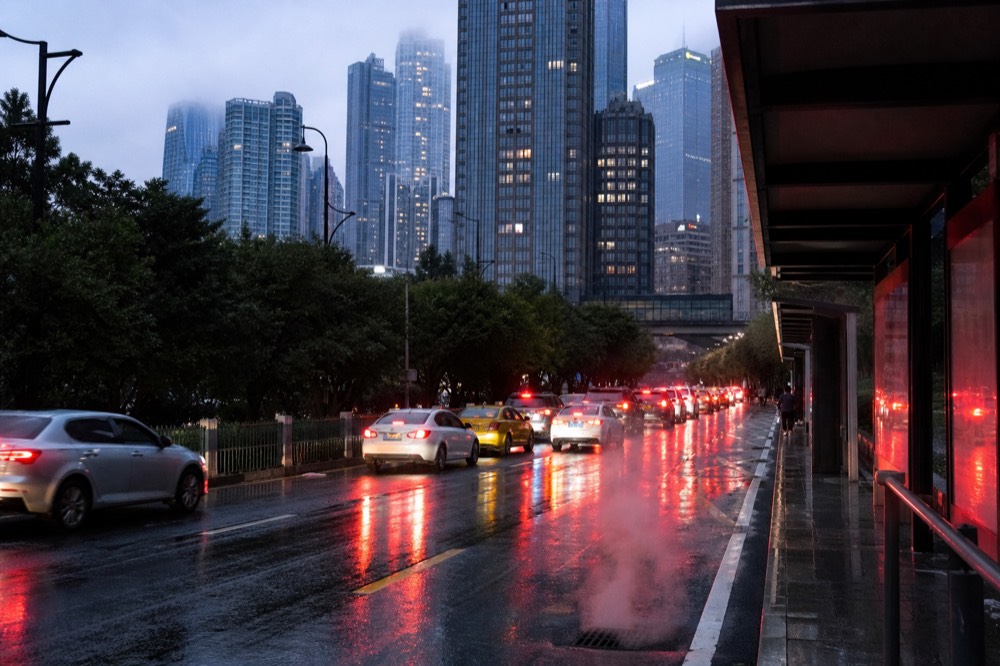
Two UK advisory lines are worth carrying in your head for taxis anywhere in China, and they are a government's own wording: avoid unmarked or unmetered taxis, and in marked taxis make sure someone knows where you are and note the taxi's number. The same advisory notes that disputes over fares can escalate quickly and that any physical altercation can lead to detention regardless of who is to blame, so the standing advice is simple: insist on the meter, ask for a receipt, and let a fare disagreement go. That is not a Chongqing-specific warning, it is general China travel practice, and it costs nothing to follow.
On the advisory's heavier themes, take them at face value. The US government's Level 2 rating, with its stated concerns about arbitrary enforcement of local laws, exit bans and the risk of unjust arrest or detention, is not softened here. Nothing about a evening motorcycle photoshoot on a policed riverside road in a major tourist city touches those themes, and the trend itself has been welcomed on the record by the city's Development and Reform Commission, whose Yang Gen told the Global Times that the Landing Visa "was not a tourism project designed by the city in advance" but something visitors discovered and created themselves. But the advisory is the advisory, and it is the right place to check current guidance before any international trip. For the entry and visa side of an American trip, which this page deliberately does not cover, read our companion piece on whether Americans can visit Chongqing, and for what the night city offers beyond the corridor, start with the guide to Chongqing at night.
Is Chongqing worth the trip despite the caveats?
For most American visitors the balance is straightforward: a Level 2 advisory is the same level that covers much of the world's major destinations, the UK explicitly does not warn against travel, inbound foreign arrivals to Chongqing are growing at rates among China's fastest, and the specific corridor and hours a photoshoot involves are lit, policed and regulated by published rules.
The numbers behind that last clause are worth seeing. Chongqing Jiangbei International Airport's immigration checkpoint handled more than 1.48 million inbound and outbound passengers in the first half of 2026, up 39.5 percent, the fastest growth among China's ten largest airports, and nearly 70,000 foreign travellers entered Chongqing in July 2026 alone, up 84.7 percent, figures attributed to the municipal government. The city counted 2,147,800 inbound overseas visitors in 2025. You will not be the first American on Nanbin Road; a rider told a Chinese outlet that his recent foreign customers had outnumbered Chinese ones. Those are the conditions the corridor actually operates under, and they are the opposite of an unknown quantity.
This site, Chongqing Motorcycle Photoshoot, exists because the session is a genuinely striking way to see the city, and honesty about the friction points is part of taking it seriously. The published record supports a clear picture: confirm your meeting point in advance, book early enough in the evening to catch the lit window, wear the helmet you are handed, plan the taxi before you ride, skip the peak holiday weekends if crowds are not your thing, and check the official advisories for anything beyond a night on the riverside. If you are still weighing the city itself, our longer take on whether Chongqing is worth visiting for tourists covers the fuller picture.
The short answers: no official crime rate exists for Chongqing, the US advisory level for mainland China is Level 2, Exercise Increased Caution, the Nanbin Road corridor is lit and policed inside the session window, and the 22:00 session end is a published road rule rather than a judgement call. The full questions and answers follow.
Common questions about safety in Chongqing for Americans
Is Chongqing Safe For Americans?
No authority publishes a crime rate for Chongqing, so there is no official statistic to compare with a US city. The US advisory for mainland China is Level 2, Exercise Increased Caution; the UK does not advise against travel and calls serious crime against foreign nationals relatively rare. The photoshoot corridor is a lit, busy riverside promenade with metro access, published lighting schedules and a documented police response to the trend.
Is Nanbin Road safe to walk at night?
The published record describes a roughly 24.9 km riverside landscape avenue that is part of the city's core night-tourism area, lit under the municipal landscape-lighting schedule until at least 22:30 in summer and 21:30 in winter, served by two metro stations, and policed with designated filming zones and time controls for the motorcycle photoshoot trend. Two-wheelers are banned on the road from 22:00 to 06:00 daily.
What is the US travel advisory level for China?
Level 2, Exercise Increased Caution, for mainland China. The advisory's stated reasons are, verbatim, "arbitrary enforcement of local laws, the use of exit bans without a fair and transparent process under the law, and the risk of unjust arrest or detention". Hong Kong is also Level 2; Macau is Level 3, Reconsider Travel.
Why does the motorcycle session end at 22:00?
Because two-wheeled motorcycles are banned on Nanbin Road between the Lanhua Road and Tengjiang Road junctions every day from 22:00 to 06:00, a rule in force since 29 January 2024. The session window of 18:30 to 22:00 is built around that published road rule.
Is it safe to ride on the back of a motorcycle in Chongqing?
The ride package puts you on the back of a bike ridden by a professional rider at 30 to 60 km/h with a photographer following, on a city riverside road, with a helmet provided as Chinese law requires. Motorcycles are barred from expressways in Chongqing, and the ride does not use them. The photo package involves no ride at all: the bike is a stationary prop.
How do I get back to my hotel after a 22:00 session?
The corridor's Loop Line stations run until 22:30 on ordinary days, which is a tight margin, so plan a taxi. The daytime taxi tariff, 10 yuan for the first 3 km and 2 yuan per km after, applies until 23:00, so a 22:00 finish is still inside the cheaper band. Use marked, metered taxis and note the taxi's number.