Is Chongqing Expensive For Tourists?
An honest cost map for Chongqing: what is genuinely priced, what is free, and which everyday costs no source publishes. No invented daily budgets.
Is Chongqing Expensive For Tourists?
No, and by a wide margin for most visitors. The city recorded 2,147,800 inbound overseas visitors in 2025, and most of its signature sights, the riverfront skyline, the lit bridges, the viewing streets, cost nothing to enter. The honest caveat is that several everyday costs, hotel rates, meals, metro fares, are not published in a form this site could verify, so this page prices only what it can prove.
The reflex move for a travel article is to print a number: so much per day for budget travellers, more for comfort. Most of those numbers are assembled from other articles, which were assembled from other articles, and none of them can be traced to anything a Chongqing authority actually publishes. This site's own research file records, item by item, which prices were found at source and which were not, and the honest answer to this question starts there.
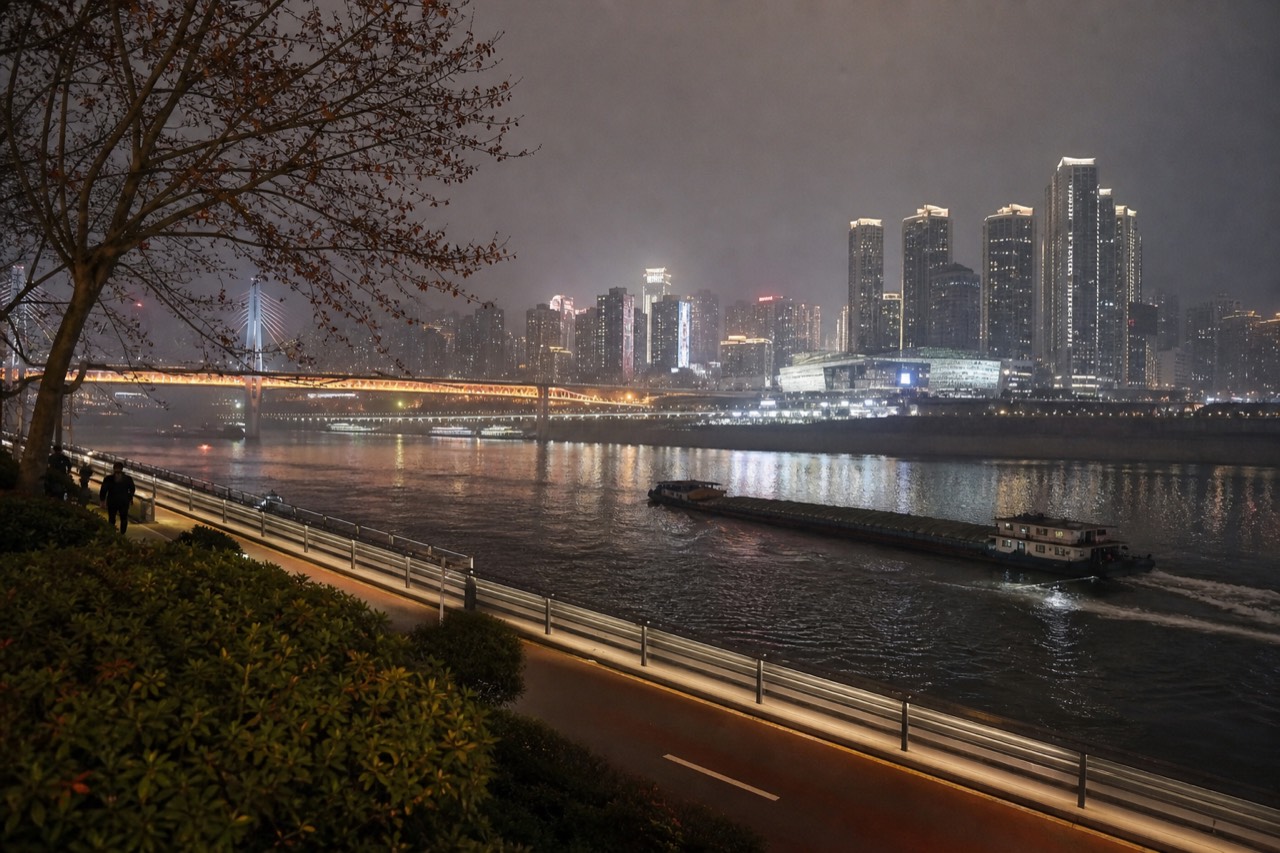
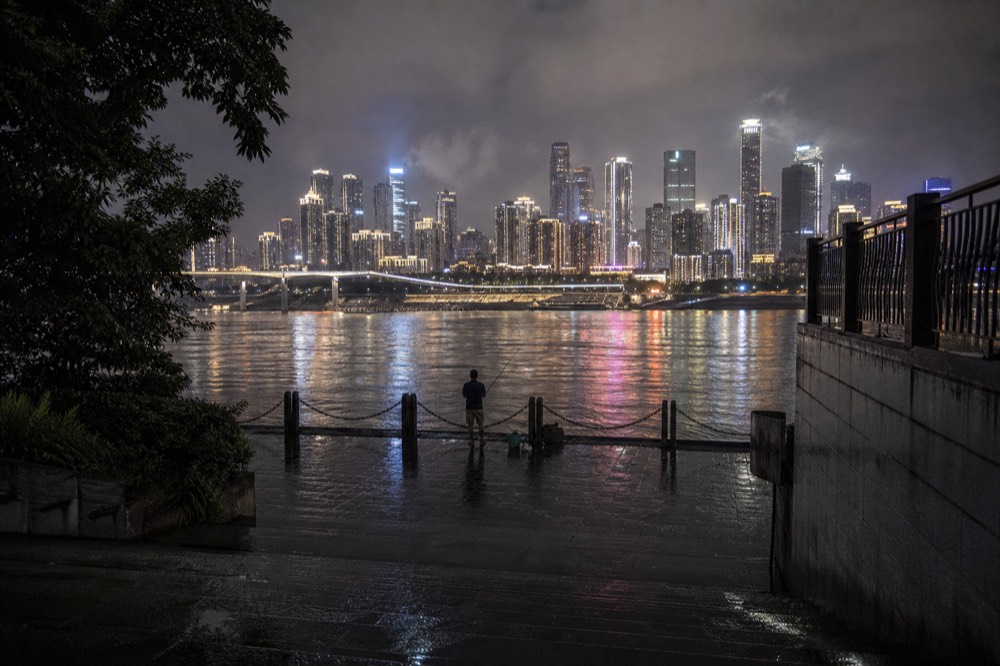
What the research supports is a city whose headline attractions are mostly public space. The Yuzhong skyline that everyone photographs is free. The bridges are public roads. The riverside promenades are free to walk. Even the phenomenon this whole site is built around, the viral motorcycle photoshoot trend that has drawn more than 1.52 billion views across related videos, plays out on a public road, Nanbin Road, against a backdrop that costs nothing to switch on and nothing to look at.
Within that picture, the paid items cluster into two groups: experiences that were created as products, like the photoshoot this site sells, and a small number of ticketed viewpoints. The rest of a visitor's spending, transport, food, a bed, is real but is priced dynamically or locally in ways no official source publishes. Saying so plainly is more useful than a fake number, and it is what the rest of this page does.
If you are weighing the one signature paid experience against everything else, these are the options:
The two photoshoot packages, priced exactly
The two photoshoot packages cost exactly HK$414 for photos and HK$482 for video, the latter about 16 percent more, both priced per single person. Each meets on Nanbin Road at night between 18:30 and 22:00, and each delivers files by email or WeChat within one to three days. That is the entire verified price surface.
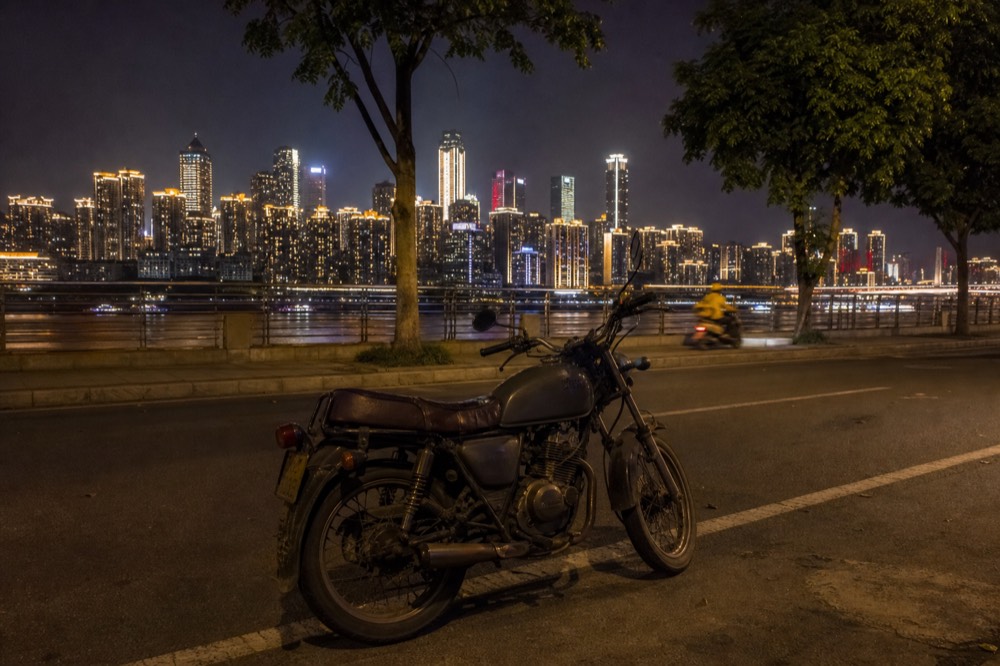
The cheaper of the two, the Motorcycle Photo Shoot Package, is 15 minutes of posed shooting with a parked motorcycle as a prop. The operator's own words on the listing are unusually clear: "this package only provides static photo shooting services and does not include a motorcycle riding experience." What you get for the money is all the negatives plus 9 retouched photos, and a helmet is provided. There is no ride, no video, and no clothing or makeup, so the price buys a studio-style shoot that happens to use a bike and a city skyline as its set.
The step up is the Motorcycle Video Shoot Package at HK$482, and it is a genuinely different product rather than a bigger version of the first. It is a pillion ride with a professional rider and a photographer following, at riding speeds of 30 to 60 km/h, and it delivers one edited video of 25 to 35 seconds with action guidance during the ride. Stills are not promised in the inclusion list, though two reviewers reported being sent photos anyway, so the honest wording is "not promised" rather than "never given". It is restricted to riders 18 and over, which the photo package is not, because only this one puts you on a moving bike.
Setting these against the open market is where the comparison gets interesting. Independent Chinese reporting puts base motorcycle-photoshoot packages in Chongqing at 198 to 598 RMB, with scripted or story-driven packages at 2,000 to 4,000 RMB, figures this site verified against more than one outlet. The listing prices sit inside that band, at the lower end of it, which is worth knowing before you assume a booked-through listing must cost more than the street.
| Package | Price on the listing | What it includes | What it excludes |
|---|---|---|---|
| Motorcycle Photo Shoot Package | HK$414, the "from about $52.85" from-price | 15 minutes posed shooting, all negatives, 9 retouched photos, helmet | Any riding, video, clothing, makeup |
| Motorcycle Video Shoot Package | HK$482, about 16 percent more | Pillion ride with a professional rider, following photographer, one edited 25 to 35 second video | Clothing, makeup, promised stills |
| Open-market base packages | 198 to 598 RMB | Varies by operator | Varies by operator |
| Open-market scripted packages | 2,000 to 4,000 RMB | Story-driven shoots | Varies by operator |
The combined listing, the Chongqing Internet-famous Motorcycle Photo & Video Experience, is where both packages live, with about 30 minutes per person suggested and a 15 to 45 minute range given. It has 10 reviews, too few for a fair star rating to mean much, and more than 100 bookings. Free cancellation is offered, with no window published, which matters if your travel dates are still loose. For a fuller treatment of the trend's economics, the companion piece on what the Chongqing motorbike trend costs goes deeper than this page does.
What this site can price, and what it cannot
The honest cost map has three columns: items with a verified price, items verified as free, and items where no authority publishes a number at all. The photoshoot packages, the open-market band, the visa-free entry policy and the free skyline all sit in the first two. Hotel rates, meals, metro and cableway fares and taxi costs sit in the third, and this page refuses to invent them.
That third column is larger than most travel writing admits. This site's research passes searched for published metro fares, cableway fares, hotel prices and meal prices for Chongqing and recorded what survived a second read. Where a figure could not be traced to a primary source, the honest move is to say the cost exists but the number is not published in a citable form, and to point you at whoever does publish it.
| Cost category | Can this site price it? | What is actually known |
|---|---|---|
| Motorcycle photo package | Yes | From about $52.85 per person, HK$414 on the listing |
| Motorcycle video package | Yes | HK$482 on the listing, about 16 percent more |
| Open-market photoshoot band | Yes | 198 to 598 RMB base, 2,000 to 4,000 RMB scripted |
| Signature viewpoints | Yes | Almost all free to enter; see below |
| Entry to China, eligible travellers | Yes | 240-hour visa-free transit for 57 countries, no visa fee |
| Metro and monorail fares | No number printed | Distance-banded, set by the municipal price authority |
| Yangtze River Cableway fare | No number printed | Government-guided maximum prices set by the price authority |
| Hotels | No | No verified rates; areas covered separately |
| Meals | No | No verified published range |
| Taxis | No | Tariff exists but this page's brief does not print it |
The pattern in that table is the real answer to this article's question. The things that make Chongqing famous, and that fill the photo feeds, are overwhelmingly free, while the paid experiences are discrete products you choose one at a time. A visitor can spend an evening walking the lit riverfront for nothing, then decide whether one 52-dollar photoshoot is worth it, and that decision is the whole of the "expensive or not" calculation for many people. That is the approach Chongqing Motorcycle Photoshoot takes throughout: price what is verified, name what is not, and never guess the rest.
Free landmarks versus ticketed ones
The overwhelming majority of Chongqing's famous sights cost nothing to enter: Hongyadong's public areas, the Liziba monorail viewing platform, Eling Park, the bridges, the riverside promenades. A small number of viewpoints are ticketed, most notably the Raffles City Crystal skybridge, for which this site's research could not verify a current price.
This is the part of the cost question where Chongqing is unusually generous. The stilt-house complex at Hongyadong, the monorail-through-a-building platform at Liziba, the park at the top of Eling, the pedestrian decks of the great bridges: all public, all free at the point of entry. Hongyadong's public areas are free, with paid interior exhibits optional, and reservation may be advised at peak periods. The Liziba viewing platform opposite the station is free, with no ticket, and temporary one-way crowd circulation at peak holidays.
| Sight | Entry cost | Notes |
|---|---|---|
| Hongyadong public areas | Free | Paid interior exhibits optional; reservation advised at peaks |
| Liziba viewing platform | Free | One-way crowd flow possible at holidays |
| Eling Park | Free | High point of the Yuzhong peninsula |
| Riverfront promenades and bridges | Free | Public space, lit nightly |
| Yuzhong skyline and lighting | Free | Runs on the published municipal schedule |
| Raffles City Crystal skybridge | Ticketed | Current price not verifiable; do not trust aggregator figures |
The caveat on the last row matters. Reported prices for the Crystal observation deck circulate on aggregator sites, but this site's verification passes could not confirm any of them at source, so no figure appears here. Treat any specific skybridge price you read elsewhere with the same suspicion this research did. The full inventory of free things to do, far beyond what this cost-focused page lists, lives in the free things to do in Chongqing guide.
How do you pay as a foreigner in Chongqing?
Foreign Visa, Mastercard, Amex, JCB, Discover, Diners Club and UnionPay International cards can be bound to Alipay and WeChat Pay after passport verification, with reported fee tiers of no fee under 200 RMB and about 3 percent above it. Refusing cash is against the rules, though this site could not locate the governing document by name. Payment, not price, is the real friction for foreign visitors.
The fee tiers deserve attribution, because they come from traveller guides rather than an official first-party source, and this site's research notes exactly that. The mechanism itself is well established: install the app, verify your passport, bind an international card, and pay by QR code almost everywhere. Cash remains legally acceptable, and merchants are not supposed to refuse it, though in practice a working QR setup is far smoother than notes.
None of this changes what things cost, but it changes how reliably you can pay for them, which on a short visit can matter as much as price. Two practical notes from the same research: set up at least one of the two apps before you arrive, and treat a card that fails to bind as a reason to test the second app rather than to assume the whole system rejects foreign cards.
Accommodation is the one big line item this page cannot touch honestly. Hotel rates in Chongqing move with season and demand, and no verified range survives this site's checks. What can be said is that the areas worth knowing, Yuzhong peninsula for walkability, Nanbin Road on the south bank for the skyline views, the Jiefangbei district for shopping and transport, are mapped out in the where to stay in Chongqing guide, which deliberately describes the areas rather than printing unverified prices.
Getting there and getting around
Entry itself can be free of visa cost for eligible travellers: 240-hour visa-free transit covers 57 countries through 65 designated ports, per the National Immigration Administration, and Chongqing's airport is one of them. Within the city, the metro runs 12 lines over 574.12 km on distance-banded fares whose schedule this page does not print, and no verified journey-time or fare figures for airport-to-city runs exist in this site's research.
The visa point is worth its own sentence, because it is a real cost avoided. Travellers from the 57 eligible countries holding ordinary passports and confirmed onward tickets to a third country can enter visa-free for up to 10 days, a policy detailed on the National Immigration Administration's policy page. A separate 30-day unilateral visa-free entry scheme covers roughly 50 countries and needs no onward ticket, with the country list having moved repeatedly, so the page rather than any printed list is the authority. Check your own nationality against it before booking anything.
Inside the city, the metro and monorail network is extensive, 12 lines and 324 stations, mixing conventional metro with the straddle-beam monorail that gives Chongqing its famous through-the-building shots. Fares are distance-banded and set by the municipal price authority, whose fare notice is published at the Chongqing Development and Reform Commission's site, and this page's brief deliberately prints no number from it. The Yangtze River Cableway works the same way: a real, government-guided fare structure, published by the same authority, and not reproduced here.
The scale of inbound tourism backs up the sense that the city is geared up for foreign visitors and priced accordingly. The airport's immigration checkpoint handled more than 1.48 million inbound and outbound passengers in the first half of 2026, up 39.5 percent and the fastest growth among China's ten largest airports, a figure attributed to the municipal government by the Global Times. The wider economic picture, including the tourism industry's 147.109 billion yuan of value added, is in the municipal statistics bureau's 2025 communique.
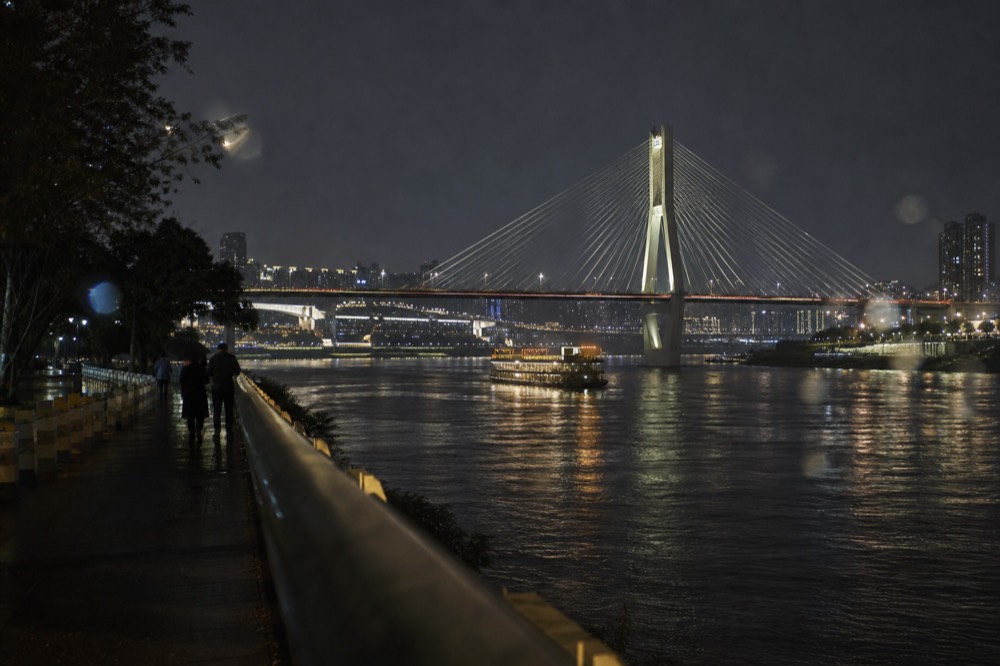
One cost that is worth flagging even without a number is the gap between a 22:00 finish and the metro. The photoshoot session window ends at 22:00 because two-wheeled motorcycles are banned on Nanbin Road from 22:00 to 06:00, and the Loop Line stations serving the corridor stop earlier than you might assume on an ordinary day. Budget for a taxi ride back, expect the daytime flag-fall to apply before 23:00, and do not plan the last train as a certainty.
The bottom line on a Chongqing budget
Chongqing is a low-cost destination in its structure: the sights are free, the paid experiences are discrete and mostly cheap by Western standards, and the biggest verified line item most visitors add, the photoshoot, starts from about $52.85. What cannot be honestly quoted is a per-day total, because the everyday costs that would make one up are simply not published in verifiable form, and a made-up number would be worse than none.
The comparison that frames it for most travellers is the 198 to 598 RMB open-market band for the very service this site lists. At the low end of that band, the experience that has drawn a billion-plus views is an evening's impulse purchase, not a splurge. Add a free walk along the lit riverfront, a free viewpoint or two, and the shape of a Chongqing evening emerges: almost nothing spent, plus one deliberate purchase.
For the readers who land here because a night motorcycle photoshoot is already on their list, these are the three ways to book it, and the price question for each is answered above rather than guessed below:
These are the questions readers ask most about Chongqing costs, answered with the same rule this page applies throughout: verified figures only, and a plain statement where no figure is published. Free sights, payment mechanics, the two photoshoot packages and the visa rules are all covered below, with nothing guessed and no invented daily budget.
Common questions about tourist costs in Chongqing
Is Chongqing Expensive For Tourists?
No, not by the standards of China's major cities. Most signature sights are free to enter, the verified paid experiences start at the equivalent of about $52.85, and the costs that would push a daily budget up, hotels and meals, are simply not published in verifiable form, which is why this site declines to print a per-day total.
How much does the motorcycle photoshoot cost?
The photo package is HK$414 on the listing, the "from about $52.85 per person" from-price, and the video package is HK$482, about 16 percent more. Open-market base packages in Chongqing run 198 to 598 RMB, so the listing sits at the lower end of the published band.
Which Chongqing sights are free?
Hongyadong's public areas, the Liziba monorail viewing platform, Eling Park, the riverfront promenades and the bridges are all free. The Yuzhong skyline lighting itself costs nothing to watch and runs on a published municipal schedule. Ticketed viewpoints are the exception, most notably the Raffles City Crystal skybridge.
Can I pay with a foreign card in Chongqing?
Yes, once you bind an international Visa, Mastercard, Amex, JCB, Discover, Diners Club or UnionPay International card to Alipay or WeChat Pay after passport verification. Reported fee tiers are no fee under 200 RMB and about 3 percent above it, though these figures come from traveller guides rather than an official source. Refusing cash is against the rules.
Is there a published daily budget for Chongqing?
No authority publishes one, and this site's research could not verify hotel rates, meal prices, metro fares or taxi fares in a citable form. Any specific daily budget you read is an estimate assembled by a writer, not a figure from the city, and should be treated as such.
Do I need to budget for a visa?
Possibly not. China's 240-hour visa-free transit covers 57 countries through 65 designated ports, including Chongqing's airport, for travellers with onward tickets to a third country, and a separate 30-day unilateral visa-free entry scheme covers roughly 50 countries with no onward ticket required. Check the National Immigration Administration's page for your nationality before booking.