Liziba Monorail Station: the Train Through the Building, Explained
Liziba is the one Chongqing landmark almost everyone has seen without knowing its name: a monorail train sliding straight through the sixth to eighth floors of an apartment building. Here is what the published record actually says about it, and what to expect if you go.
Short answer
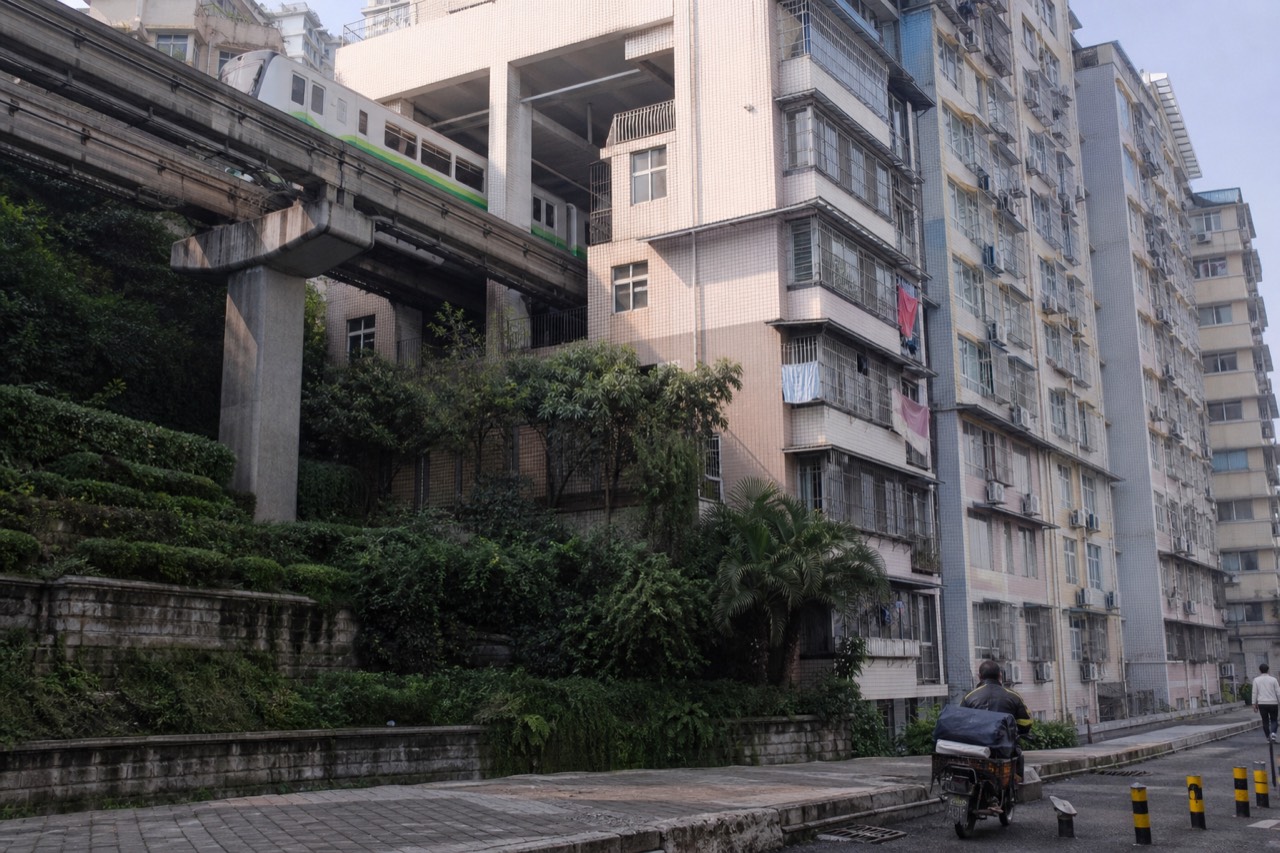
Liziba is a Line 2 straddle-beam monorail station threaded through floors six to eight of a residential building, opened 18 June 2005. The free viewing platform opposite opened in August 2018. The station is not closed; parts are being renovated in rotation until 30 December 2026 because crowds far exceed its design capacity.
Chongqing has hundreds of strange engineering feats, but only one of them became a global shorthand for the city: the train that passes through a residential tower as if the tower had simply agreed to let it. The straddle-beam monorail at Liziba, on Line 2 of the Chongqing Rail Transit, threads floors six to eight of an ordinary apartment block above Liziba Zhengjie street. It opened on 18 June 2005, and the building did not come first by accident: the station and the tower were engineered together, with the track deck isolated from the residential structure so vibrations and noise stay on the transit side. Sites like Chongqing Motorcycle Photoshoot exist partly because of this one building.
Why does a monorail run through the middle of an apartment building?
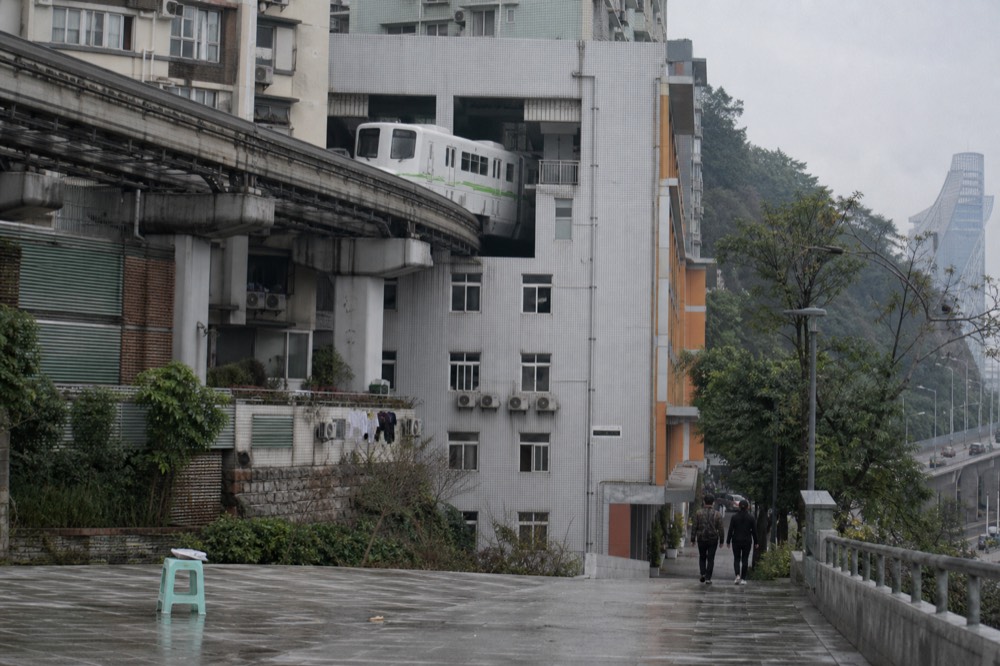
Liziba station sits inside a residential building because Chongqing's terrain left no room at ground level. The Line 2 straddle-beam monorail needed to climb the hillside above Liziba Zhengjie, and the least disruptive alignment took it through floors six to eight of the block, on a structure engineered separately from the apartments around it. It opened for service on 18 June 2005.
The choice of a straddle-beam monorail was itself a terrain decision. Chongqing's central districts pile street on top of street, and the monorail's tight curves and steep climbing gradient suited a route that a conventional heavy-rail train could not have followed. Line 2 was the network's first monorail line, and Liziba became its most photographed minute of track almost by accident: the building is a normal residential block, and the train passes behind people's balconies as a matter of daily routine.
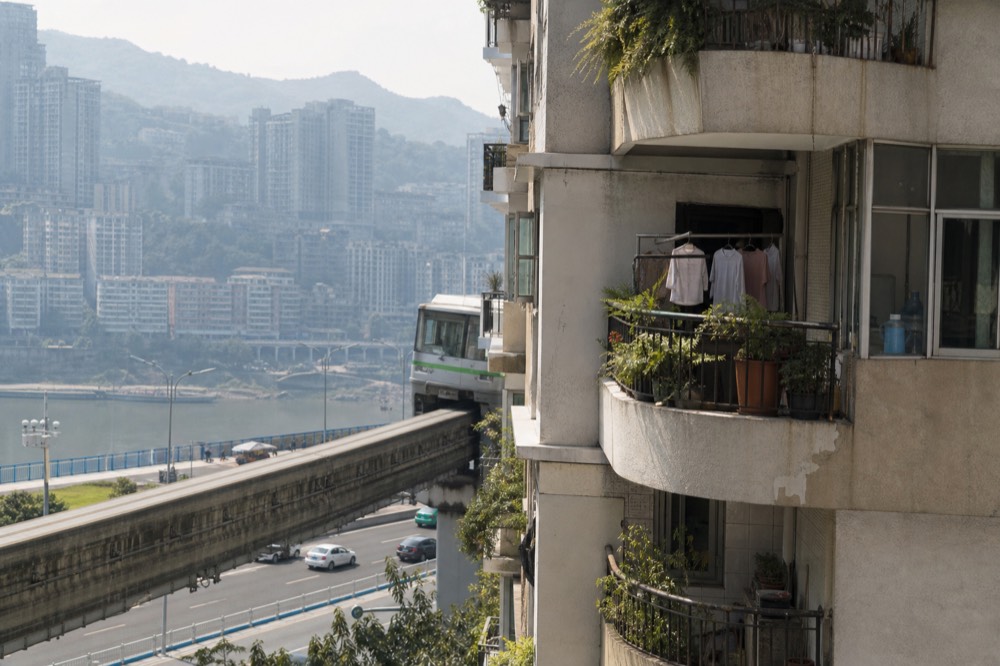
The engineering point that most descriptions skip is the separation. The track deck and the building are structurally decoupled, so the train's load path never touches the apartments' frame. That is why residents live with a metro line through their walls and why the arrangement has now run for over two decades without modification to the alignment. Chongqing's Rail Transit network has grown to 12 lines, 324 stations and 574.12 km, mixing conventional metro with straddle-beam monorail, but Liziba remains the only place where the two ideas, housing and transit, share one address so literally.
| Fact | Published figure |
|---|---|
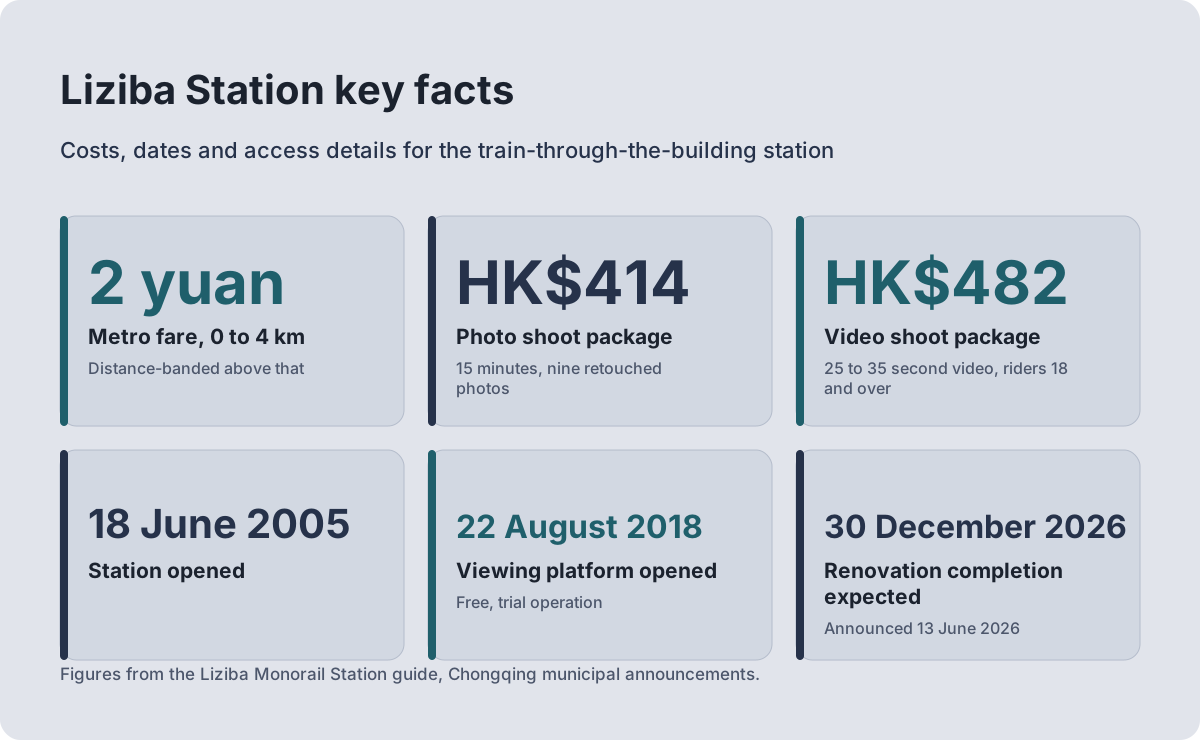
| Line | Chongqing Rail Transit Line 2, straddle-beam monorail |
| Position in building | Floors 6 to 8 of a residential block |
| Station opened | 18 June 2005 |
| Viewing platform | Free, opened to the public in trial operation 22 August 2018 |
| Metro fare to reach it | 2 yuan for 0 to 4 km, distance-banded above that |
| Line 2 service window | 06:30 to 23:00 per the 2022 official network summary |
For the wider picture of how the metro, buses and taxis fit together in a city built on cliffs, the getting around Chongqing guide covers the network as a whole.
How do you photograph the train passing through Liziba?
Stand on the free viewing platform opposite the station, on Liziba Zhengjie, and wait. The platform was built in 2018 specifically to give the public a safe sightline, trains pass on the through-building section at regular intervals, and the classic shot is the train framed by the tower's midsection openings, balconies above and street below. No ticket and no reservation is needed.
The platform opened in trial operation on 22 August 2018 and has stayed free since. It faces the station directly, so the train arrives already inside the building and slides out through the opening, which is the moment most photographers time for. Because Line 2's published train frequency at Liziba is not published anywhere official, the practical approach is simply to wait: the network-wide headway band is 2.5 to 12.5 minutes, and a train will pass within that window. Bring a fast enough shutter to freeze the train, or deliberately slow it down for motion blur against the static balconies.
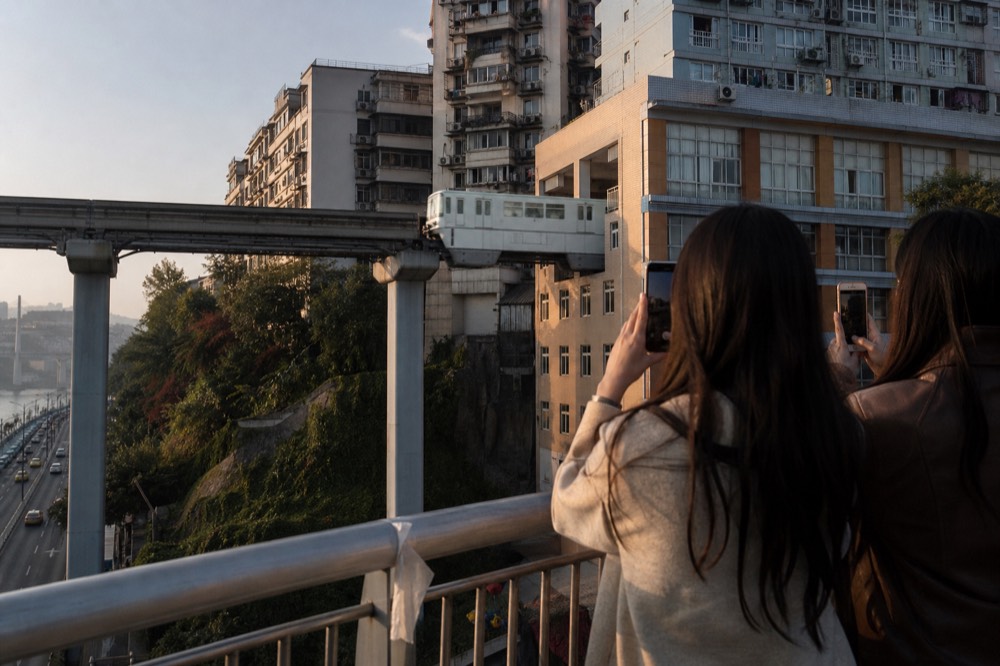
One rule is explicit and worth knowing before you fly anything: the Chongqing Rail Transit Regulations, revised and in force from 1 July 2025, prohibit releasing drones and other low-altitude aircraft within 100 metres either side of an at-grade or elevated line. Liziba is an elevated monorail, so a drone there is expressly unlawful, and signage at the platform marks it as a no-fly zone without a permit after earlier incidents. Handheld photography, by contrast, faces no published restriction at all: the same regulations' prohibited-conduct lists contain no photography, video, tripod or live-streaming item. If you want the full map of shootable oddities across the city, the Chongqing cyberpunk photo spots guide lines them up.
The still frame you take from the platform is the cheapest version of this city's photographic offer. For a different shape of image, one where you are the subject rather than the shooter, Chongqing also runs a nightly motorcycle photo session on the south bank, and the pair of packages are worth understanding side by side.
The photo package is the one to look at first if the Liziba stills have you in a frame of mind. The Motorcycle Photo Shoot Package, sold per person, gives you 15 minutes of posed shooting with a parked motorcycle as a prop, all the negatives plus nine retouched photos, and no ride at all: it costs HK$414, which is the same as the "from about $52.85" price on the combined listing. The bike is a prop, not transport.
If a train you photograph is one kind of souvenir, a ride you are filmed on is another entirely. The Motorcycle Video Shoot Package is that second thing: a pillion ride with a professional rider and a following photographer, producing one edited video of 25 to 35 seconds with action guidance during the ride. It costs HK$482, about 16 percent more than the photo package, and it is restricted to riders 18 and over. Stills are not promised in the inclusion list, though two reviewers reported being sent photos anyway.
Is Liziba Station closed, and what is actually happening there in 2026?
No. Liziba Station is open and in normal service, and no permanent closure is published anywhere. What is real is a phased renovation announced on 13 June 2026: because visitor numbers far exceed the station's design capacity, parts of the platform, entrances and concourses close in rotation behind hoardings, with 14 new lifts and escalators already installed, and completion expected on 30 December 2026.
This is the question the search layer asks most often, and the honest answer is better than a rumour. The Chongqing municipal government published the full renovation schedule in June 2026, and it is a rotation, not a shutdown. Part of the platform is closed for works from 16 June to 30 November 2026. Part of entrance 1 closed from 16 June to 25 September 2026, with passengers detouring through the commercial area on the same level. Concourse hall B and exit 3 fully closed from 16 June, expected to reopen on 31 August 2026. Part of entrance 2 closed from 22 June to 20 September 2026. Concourse hall A fully closed from 1 September, expected back on 31 October 2026.
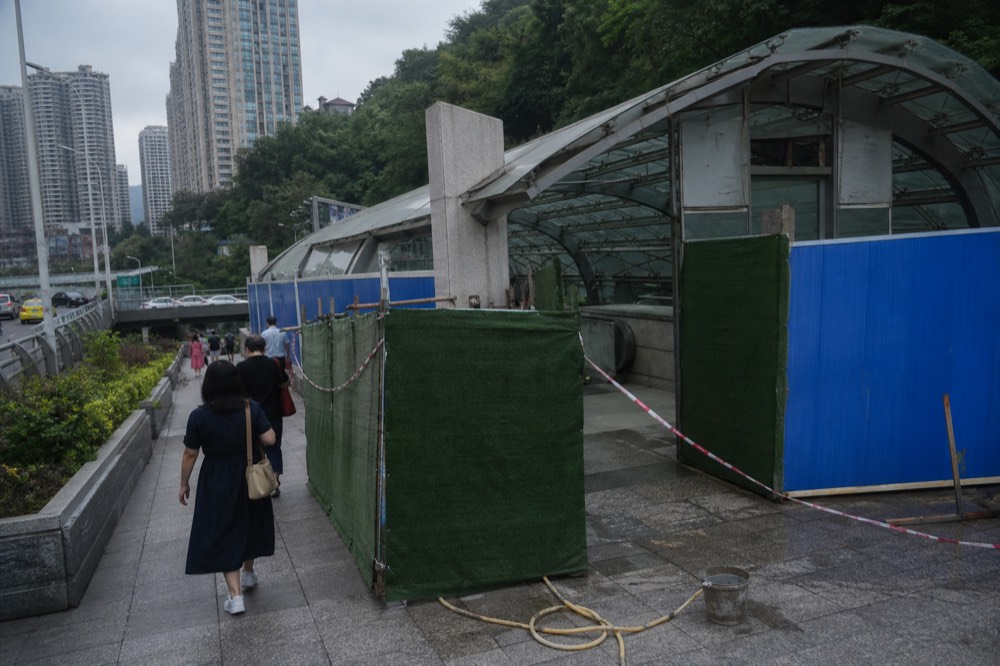
If you read a second-hand report that "Liziba is closed", the likeliest source is one of these partial closures, or one of the nearby spots that do carry real restrictions: the Eling stack bridge requires a real-name reservation and closes Mondays, and the Kaixuan Road escalator had a short full closure in early September 2026. The platform itself remains free, open and unticketed, and the renovation is happening precisely because the monorail-through-a-building shot has drawn crowds the 2005 station was never sized for. The municipal notice asks passengers to plan routes in advance and follow on-site signs, which is the correct advice for the rest of 2026.
How do you get to Liziba, and what does the metro cost?
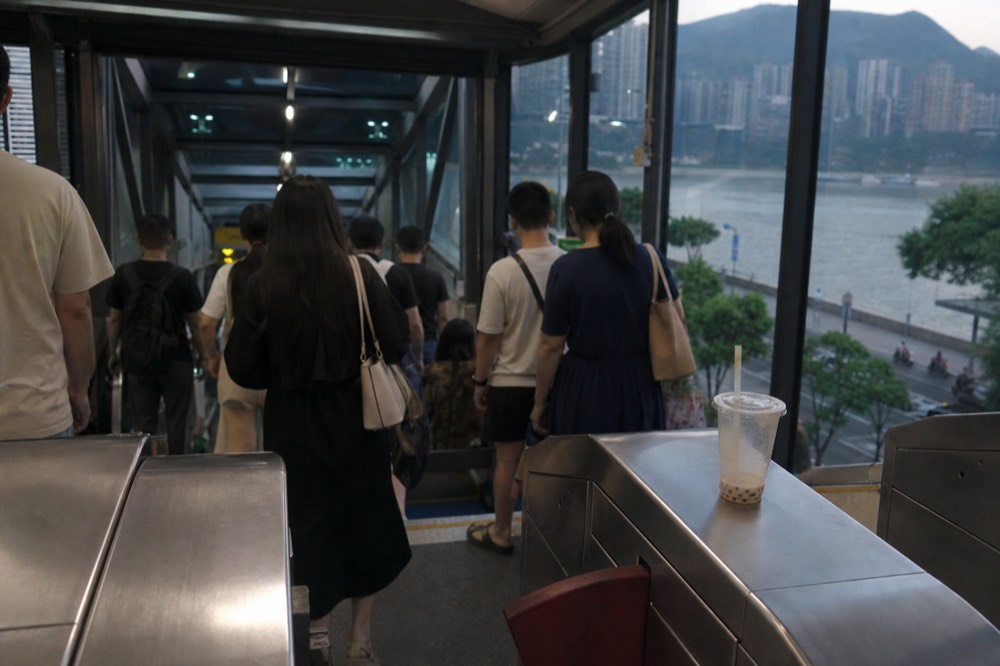
Take Line 2 to Liziba station itself, or walk down from Eling. Chongqing Rail Transit fares are distance-banded from a 2-yuan minimum for 0 to 4 km, set by the municipal price notice of July 2025, and Line 2 runs 06:30 to 23:00 on the official network summary. The viewing platform sits opposite on Liziba Zhengjie, reached from street level.
The fare table below is from the municipal development and reform commission's notice of 25 July 2025, in force from 30 July 2025, and it applies to every line including Line 2. You pay by distance on the shortest path travelled, so a short hop to Liziba costs the 2-yuan minimum. The operating-hours figure carries a caveat the site should state plainly: the only official network summary is dated 28 September 2022 and predates later line openings, so treat it as the published summary of that date rather than today's per-station timetable, with per-station first and last trains published by the operator.
| Distance travelled | Fare |
|---|---|
| 0 to 4 km | 2 yuan |
| 4 to 8 km | 3 yuan |
| 8 to 12 km | 4 yuan |
| 12 to 17 km | 5 yuan |
| 17 to 23 km | 6 yuan |
| 23 to 30 km | 7 yuan |
| 30 to 40 km | 8 yuan |
| 40 to 55 km | 9 yuan |
| Above 55 km | 1 yuan more per additional 20 km |
Liziba is roughly 5 km west of the Nanbin Road riverside corridor, on the Jialing side of the peninsula, so it pairs naturally with an Eling Park or Testbed 2 visit, both served by Eling station on Line 1, one stop up the hill from Liziba's end of Line 2. Trains on the elevated section give you the layered-street views for free on the way in, which is a large part of why visitors rate the ride itself as an attraction.
When does crowd control and one-way flow apply at Liziba in 2026?
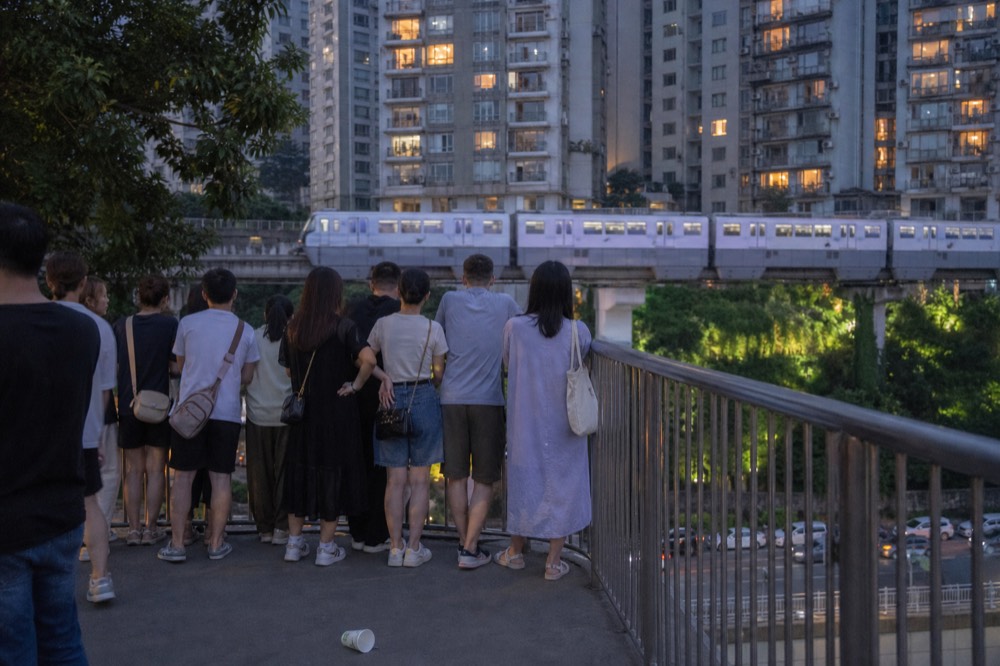
Peak and holiday periods trigger a clockwise one-way pedestrian flow on the platform, and the 2026 State Council holiday dates tell you exactly when: Spring Festival 15 to 23 February, Qingming 4 to 6 April, Labour Day 1 to 5 May, Dragon Boat 19 to 21 June, Mid-Autumn 25 to 27 September and National Day 1 to 7 October. Weekends run busier than weekdays but are not flagged for controls.
The one-way clockwise circulation is reported in Chinese coverage of the May Day 2026 and Spring Festival 2026 periods, and it is a safety measure, not a closure: you enter at one end of the platform and exit at the other, following staff direction. It matters for photographers because it removes your freedom to chase the angle, so if the shot is the point of your visit, go on a weekday. The legal basis for anything heavier is real too: the Rail Transit Regulations empower the operator to limit flow, skip a station or close it entirely when crowds may affect operating safety, under Article 52, with a duty to inform the public.
| 2026 period | Dates | What to expect at Liziba |
|---|---|---|
| Spring Festival | 15 to 23 February | Peak control likely, one-way flow in force |
| Qingming | 4 to 6 April | Busy, controls possible |
| Labour Day | 1 to 5 May | Peak control reported in this period |
| Dragon Boat | 19 to 21 June | Busy, controls possible |
| Mid-Autumn | 25 to 27 September | Busy, controls possible |
| National Day | 1 to 7 October | Peak control likely, one-way flow in force |
The holiday dates come from the State Council General Office notice published in November 2025, so they are firm. The expectation of controls on the two golden weeks and Labour Day follows the pattern of reported controls on those exact 2026 periods, and the site says "likely" rather than promising, because the operator decides on the day.
What is verified, and what does nobody publish about Liziba?
Three things the record answers firmly: the station's position through floors six to eight, its 2005 opening, and the free platform opened in 2018. Three things no authority publishes: Line 2's train frequency at Liziba, the platform's exact area, and any operator rule on tripods or commercial shoots. Reports that the platform is ticketed are misinformation; it remains free with no reservation.
This separation is worth laying out in one place, because Liziba attracts confident claims that have no primary source behind them. The verified facts come from the station's own references and the municipal government's renovation notice. The unpublished ones are genuinely unpublished: searches of the operator, the transport commission and Yuzhong District return nothing on frequency, platform area or venue-specific photography rules, and this site would rather say so than guess.
| Claim | Status |
|---|---|
| Station runs through floors 6 to 8 | Verified, station references |
| Opened 18 June 2005 | Verified |
| Free platform, opened 22 August 2018 | Verified |
| One-way clockwise flow at peaks | Single-source, reported May Day and Spring Festival 2026 |
| Train frequency at Liziba | Not published by any authority |
| Platform's exact area | Not published |
| Ticket or reservation for the platform | False; free and unticketed |
| Drones near the elevated line | Prohibited, Rail Transit Regulations Article 49(9) |
The renovation notice is the single most useful document published about Liziba in years, and it reframes the "closed" question entirely: the station is being enlarged because the crowds the monorail shot attracts broke its original design assumptions. That is the information-gain here, and it is a better answer than any rumour.
How does Liziba compare with Chongqing's other terrain oddities?
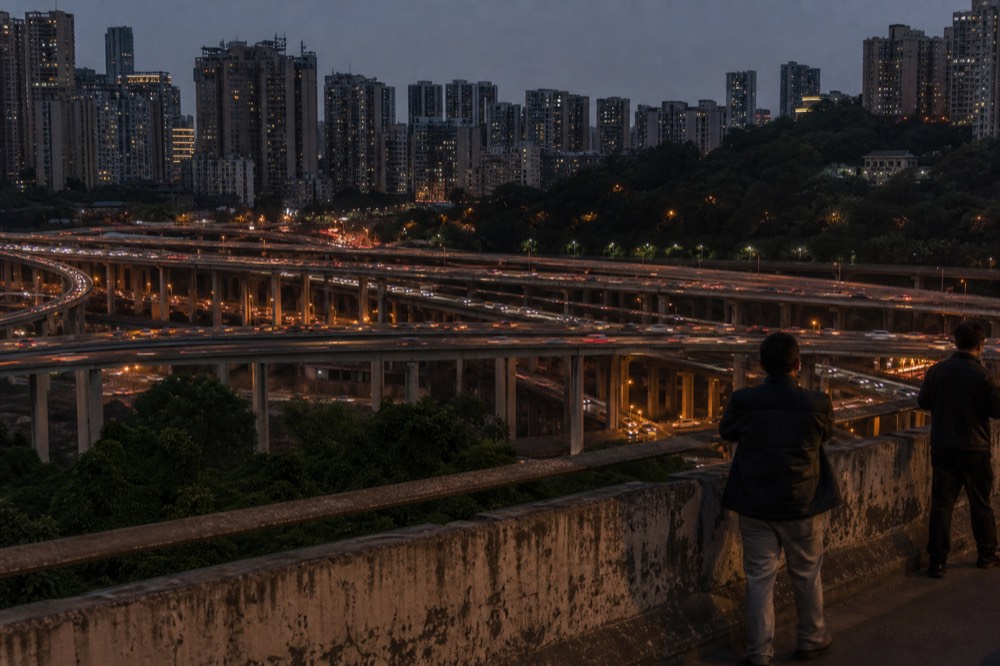
Liziba is the city's most literal collision of transit and housing, but Chongqing offers a whole family of vertical oddities: the Liziba train-through-a-tower, the Yuzhong peninsula's roughly 220 m rise from riverside to ridge, the 105 large bridges over two rivers, and the multi-level street network behind the 8D nickname. Each is a separate engineering answer to the same problem, a mountain city that ran out of flat ground.
The comparison matters because visitors often conflate them. The Liziba shot is a transit-through-building image; the peninsula's vertical range is why streets stack; the bridge count is why the city reads as a network of spans; and the layered road system is what earned the "8D magic city" label, a popular-media term with no official originating publication, which the why is Chongqing called an 8D city piece unpacks properly. Liziba is also the oddity you can ride: a metro fare puts you inside the phenomenon, whereas most of the others you only look at.
| Oddity | What it is | Can a visitor experience it? |
|---|---|---|
| Liziba station | Monorail through floors 6 to 8 of a tower | Yes, ride Line 2 or watch from the platform |
| Multi-level street network | Roads stacked at different elevations across the peninsula | Yes, everywhere you walk |
| 105 large bridges | Large and extra-large bridges over the Yangtze and Jialing | Yes, walk or ride across |
| Huangjuewan interchange | Giant stacked interchange in Nan'an | Look only; motorcycles barred from the Inner Ring Expressway |
For a fuller account of why the city's engineering produces the visual effect people travel for, the why is Chongqing so futuristic piece traces the thread from terrain to skyline, and a night session on the south bank is where that skyline becomes a backdrop you appear in. Sessions run 18:30 to 22:00 nightly, meeting near Nanbin Bell Tower Plaza, with a helmet provided, riding at 30 to 60 km/h, and files delivered by email or WeChat within one to three days. The combined listing carries about 30 minutes per person and over 100 bookings, and the service language is Chinese, with no English-speaking rider guaranteed.
The fullest breakdown of which package buys what, the no-ride photo package against the pillion-ride video package, is in the photo or video session comparison, which exists precisely because choosing on price alone is how the listing's single 1-star review happened.
Liziba's most common questions are about closure rumours, platform access, train frequency and drone rules, and the short answers are: the station is open with a phased renovation finishing 30 December 2026, the platform is free with no reservation, no authority publishes the train frequency, and drones are prohibited within 100 metres of the elevated line.
Common questions about Liziba monorail station
Why is Liziba Station closed?
It is not. The station is open and in normal service, and no permanent closure is published. What is real is a phased renovation announced on 13 June 2026: parts of the platform, entrances and concourses close in rotation behind hoardings until the works complete on 30 December 2026, because visitor numbers far exceed the station's design capacity.
Is the Liziba viewing platform free?
Yes. The platform opposite the station opened to the public in trial operation on 22 August 2018 and has remained free, with no ticket and no reservation. Claims that it is ticketed are misinformation.
How often does the train pass through the building?
No authority publishes Line 2's train frequency at Liziba. The only citable figure is the network-wide headway band of 2.5 to 12.5 minutes, so in practice a train passes within that window and the practical advice is simply to wait on the platform.
Can I fly a drone at Liziba?
No. The Chongqing Rail Transit Regulations, in force from 1 July 2025, prohibit releasing drones and other low-altitude aircraft within 100 metres either side of an at-grade or elevated line, and Liziba is an elevated monorail. Signage at the platform marks it as a no-fly zone without a permit.
When is crowd control in force at Liziba?
During peak and holiday periods, reported at May Day and Spring Festival 2026, the platform runs a clockwise one-way pedestrian flow. The 2026 holiday dates are Spring Festival 15 to 23 February, Qingming 4 to 6 April, Labour Day 1 to 5 May, Dragon Boat 19 to 21 June, Mid-Autumn 25 to 27 September and National Day 1 to 7 October.
How much does the metro to Liziba cost?
Fares are distance-banded, starting at 2 yuan for 0 to 4 km and rising through set bands above that, under the municipal price notice in force from 30 July 2025. A short hop to Liziba costs the 2-yuan minimum, and Line 2 runs 06:30 to 23:00 per the official network summary.